10 Common Badminton Tournament Management Mistakes to Avoid

By Yug Shah
|
Jul 7, 2026
|
5 min read
|
Badminton

Running a badminton tournament sounds straightforward until registrations start pouring in, schedules begin changing, and players expect instant updates. Strong Badminton Tournament Management is about much more than creating fixtures. It involves planning, communication, scheduling, scoring, and keeping everyone informed from the first registration to the final match.
Many organizers begin with spreadsheets and messaging apps. That works for small events, but once participation grows, small mistakes quickly turn into long delays, frustrated players, and unnecessary stress. Most tournament issues are not caused by a lack of effort. They are caused by avoidable planning mistakes.
This guide covers the ten mistakes we see most often and offers practical ways to avoid them.
Quick Summary / Key Takeaways
| Common Mistake | Better Approach |
|---|---|
| Late planning | Start preparation 6 to 8 weeks early |
| Manual registrations | Use digital registration forms |
| Poor scheduling | Create realistic match intervals |
| Weak communication | Send instant updates to participants |
| Manual score tracking | Use a badminton live scoring app |
| No backup plan | Prepare for delays and withdrawals |
| Unclear rules | Publish tournament guidelines before registrations open |
| Too many manual tasks | Choose reliable tournament software |
| Limited volunteer coordination | Assign clear responsibilities |
| No post-event review | Collect feedback and improve future tournaments |
Why Tournament Planning Matters More Than Most Organizers Think

Players remember more than who won the trophy.
They remember whether registration was simple, whether matches started on time, and whether results were updated quickly.
One thing that often gets overlooked is that the overall tournament experience influences whether players return next year.
A well-managed event builds trust. A poorly managed one spreads through word of mouth surprisingly fast.
Whether you're organizing a school competition, a club championship, or a city-wide league, good planning saves hours of last-minute problem-solving.
Signs Your Tournament Needs Better Management
| Situation | Possible Result |
|---|---|
| Fixtures change frequently | Players become confused |
| Scores are updated manually | Results take longer to publish |
| Registrations arrive through multiple channels | Participant information becomes difficult to manage |
| Volunteers receive different instructions | Match operations become inconsistent |
| Schedule overruns | Courts remain occupied longer than planned |
If several of these situations sound familiar, it may be time to rethink how your tournament is managed.
1. Waiting Too Long to Start Planning
A common mistake is beginning preparations only a few weeks before the event.
At first, everything appears manageable. Then registrations increase, venues request confirmations, officials need schedules, and sponsors ask for promotional material.
Suddenly every task becomes urgent.
Tournaments that begin planning at least six to eight weeks before the event usually face fewer operational issues.
Start by preparing:
- Tournament format
- Budget
- Venue availability
- Registration dates
- Match categories
- Volunteer assignments
- Equipment checklist
- Communication timeline
Good planning reduces last-minute decisions that often create bigger problems later.
2. Depending Completely on Manual Registration
Many local tournaments still accept entries through WhatsApp messages, phone calls, or paper forms.
This seems manageable for the first twenty players.
It becomes difficult once registrations reach one hundred or more.
Organizers often spend unnecessary hours correcting spelling mistakes, checking payment records, and confirming player details.
A digital registration system keeps everything in one place and reduces manual work.
Many organizers now prefer dedicated tournament software because registrations, payments, and participant records stay organized automatically.
Players also appreciate receiving immediate confirmation after registering.
3. Creating Unrealistic Match Schedules
Scheduling is often underestimated.
Organizers sometimes calculate that every match will finish exactly on time.
Real tournaments don't work that way.
Some matches finish in fifteen minutes.
Others continue well beyond the expected duration.
Add player delays, court maintenance, or technical issues, and the schedule begins slipping.
Good organizers always include buffer time between rounds.
A practical schedule should consider:
- Match format
- Number of courts
- Warm-up time
- Breaks
- Umpire availability
- Unexpected delays
Modern badminton scheduling software makes adjustments much easier than editing spreadsheets throughout the day.
4. Poor Communication with Players
Players become frustrated when they don't know:
- Their reporting time
- Court allocation
- Match changes
- Updated fixtures
- Score announcements
Many organizers run into this issue because communication is spread across different messaging groups.
Instead, choose one communication channel and stick with it.
Regular notifications reduce confusion and prevent players from missing matches.
Several organizers now combine online tournament platforms with automated notifications, making communication much simpler throughout the event.
Small updates shared at the right time prevent dozens of unnecessary phone calls.
5. Tracking Scores Manually
Manual scoreboards worked years ago.
Today's players expect live updates.
Parents, coaches, and spectators also want to follow results without standing beside every court.
Using a badminton live scoring app allows scores to be published almost immediately.
This reduces mistakes caused by handwritten score sheets and removes the need to repeatedly answer the same question:
"Has the next round started yet?"
Live scoring also creates a better experience for sponsors and tournament followers who cannot attend in person.
Organizers can save several hours during a weekend tournament by replacing paper scorecards with digital scoring.
Why Digital Tools Are Becoming Common
Tournament expectations continue to grow.
Players expect faster registrations, accurate fixtures, instant results, and fewer delays.
That explains why more clubs and academies are choosing badminton tournament software, badminton league management software, and broader sports event management software instead of relying only on spreadsheets.
These tools don't replace good organizers.
They simply remove many repetitive tasks so organizers can spend more time running the event rather than managing paperwork.
6. Not Having a Backup Plan
Every tournament faces unexpected situations.
A player withdraws at the last minute. A court becomes unavailable. Bad weather delays an outdoor event. A scoring device stops working.
The difference between a smooth tournament and a chaotic one often comes down to preparation.
Organizers who prepare backup plans stay much calmer when something goes wrong.
Your contingency plan should include:
- Reserve courts, if available
- Standby officials or volunteers
- Extra shuttlecocks and equipment
- Alternative match schedules
- A clear process for player withdrawals
- Backup internet access for digital scoring
When everyone knows what to do during an unexpected situation, the tournament continues with minimal disruption.
7. Not Explaining Tournament Rules Clearly
One thing that often gets overlooked is sharing tournament rules before registrations close.
Players shouldn't have to ask questions like:
- Is it knockout or league format?
- How are ties decided?
- What happens if a player arrives late?
- Are substitutions allowed?
- How many games will be played?
Unclear rules create unnecessary disputes.
Publish all tournament information on the registration page and share it again before the event begins.
A simple tournament handbook can answer most questions before they become problems.
Tournament Information Every Organizer Should Share
| Information | Why It Matters |
|---|---|
| Tournament format | Sets player expectations |
| Match rules | Reduces disputes |
| Reporting time | Keeps matches on schedule |
| Venue details | Prevents late arrivals |
| Prize structure | Improves transparency |
| Contact details | Makes support easier |
Clear communication builds trust with players and coaches.
8. Trying to Manage Everything Yourself

Many first-time organizers believe they need to oversee every task personally.
That usually leads to long days, missed details, and unnecessary pressure.
A badminton tournament involves many responsibilities:
- Registration desk
- Court management
- Match scheduling
- Live scoring
- Referee coordination
- Equipment setup
- Player announcements
- Photography
- Sponsor support
Trying to handle everything alone rarely works.
Assign responsibilities before tournament day.
Even a small volunteer team with clearly defined roles can make a huge difference.
Many organizers also choose badminton event management software to keep registrations, fixtures, announcements, and scoring organized from one place instead of switching between multiple spreadsheets and messaging apps.
9. Forgetting About the Player Experience
Winning isn't the only reason people join tournaments.
Players remember how the event made them feel.
Tournaments usually receive better feedback when organizers pay attention to small details.
Simple improvements include:
- Easy check-in process
- Clear court signage
- Comfortable waiting areas
- Regular announcements
- Drinking water availability
- Updated fixtures
- Live score access
- Quick prize distribution
Imagine two tournaments with the same number of players.
One runs on time, provides instant score updates, and communicates clearly.
The other has long queues, delayed fixtures, and confused participants.
Which one are players likely to recommend?
Small improvements often leave the biggest impression.
Real Example: Small Changes That Improved an Annual Tournament

A local badminton club had been running its annual competition using spreadsheets, paper scorecards, and WhatsApp groups.
Everything worked reasonably well until participation grew from 80 players to more than 250.
Registration errors increased.
Fixtures needed constant revisions.
Players repeatedly visited the help desk asking when their next match would begin.
Before the following season, the organizers switched to digital registrations, automated fixtures, and live scoring.
The tournament wasn't perfect, but it started on time, communication became much clearer, and volunteers spent less time answering repetitive questions.
This is a common situation as events grow.
Growth often exposes weaknesses that smaller tournaments can hide.
10. Skipping the Post-Tournament Review
Many organizers finish the prize ceremony, pack the equipment, and move on.
That's a missed opportunity.
Every tournament provides valuable lessons.
Ask yourself:
- Which matches were delayed?
- Where did players wait the longest?
- Were registrations smooth?
- Did volunteers have enough information?
- Were score updates fast enough?
- What feedback did players share?
Collect opinions from players, officials, volunteers, and sponsors while the event is still fresh in their minds.
Even a short online survey can highlight improvements for the next tournament.
The best organizers are always learning from every event.
Manual Management vs Digital Tournament Management
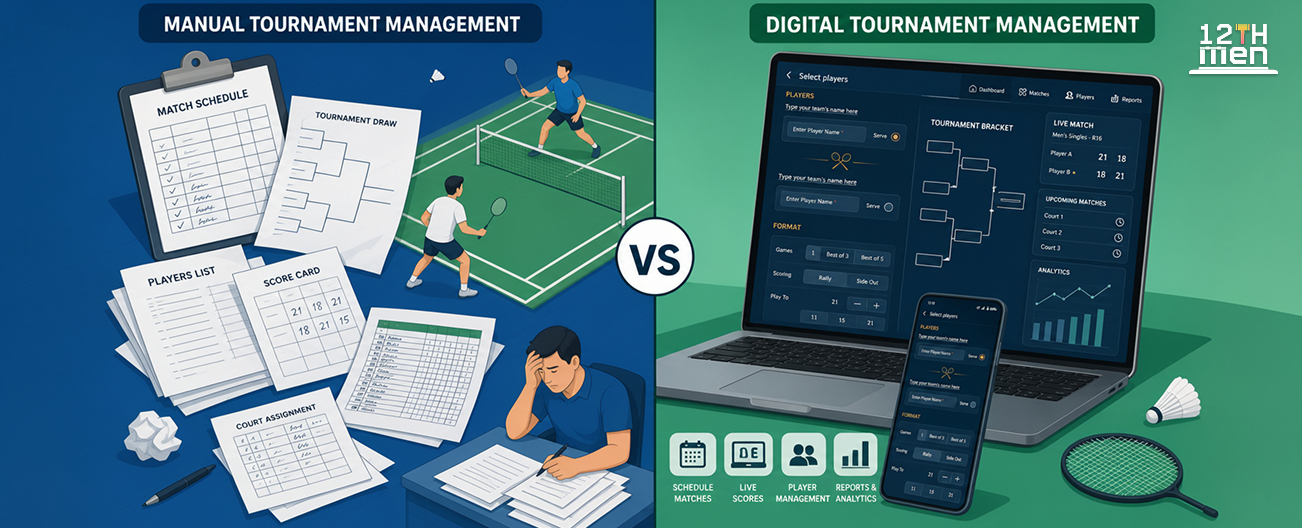
| Manual Process | Digital Process |
|---|---|
| Paper registrations | Online registration portal |
| Spreadsheet fixtures | Automatic fixture generation |
| Phone calls for updates | Instant notifications |
| Paper scorecards | Live score updates |
| Manual reports | Downloadable reports |
| Separate tools | Centralized tournament dashboard |
As participation increases, digital tools become much easier to manage than multiple spreadsheets and messaging groups.
Many organizers also include an online badminton auction app when hosting franchise-style competitions before league matches. This keeps player auctions, team selections, and tournament records connected in one workflow.
Final Thoughts
Successful tournaments rarely happen by chance.
They are the result of careful planning, clear communication, and consistent execution.
Good event management is not about avoiding every problem. It is about preparing well enough that small issues do not become major disruptions.
Whether you're organizing a school championship, academy league, club competition, or district event, learning from these common mistakes will save time, reduce stress, and create a better experience for everyone involved.
As tournaments continue to grow in size and expectations, many organizers are moving from manual processes to badminton tournament software, badminton league management software, and complete sports event management software that simplify registrations, scheduling, scoring, and event administration.
The right process, supported by the right tools, allows organizers to focus on what matters most: delivering a well-run tournament that players look forward to joining again.
Ready to Run Your Next Tournament with Less Stress?
Planning a successful badminton tournament doesn't have to mean endless spreadsheets, manual scorecards, and last-minute schedule changes.
The 12th Men helps organizers manage registrations, fixtures, scheduling, live scoring, player communication, and even franchise-style auctions through one easy-to-use platform.
Whether you're running a local club event, an academy championship, or a large league competition, The 12th Men gives you the tools to stay organized while delivering a better experience for players, officials, and spectators.
Start planning your next badminton tournament with confidence. Explore how The 12th Men can support better Badminton Tournament Management from registration to the final match.
FAQ
Got Questions? We've Got Answers.
For badminton events, tournament management includes planning, organizing, scheduling, scoring, and coordinating every stage of the competition, from player registration to final results.
A dedicated platform helps manage registrations, fixtures, scheduling, live scoring, player communication, and reports in one place. It also reduces manual work and lowers the chances of administrative errors.
Look for features such as online registrations, automatic fixture generation, match scheduling, payment tracking, live scoring, announcements, reporting, and support for multiple tournament formats.
It creates balanced match schedules, manages multiple courts, reduces fixture conflicts, and makes schedule updates much easier when unexpected changes occur.
Yes. Franchise-style leagues often use an online badminton auction app before the tournament begins to conduct player auctions, build teams, and keep squad information connected with Badminton Tournament Management workflows.
Related Articles
Badminton
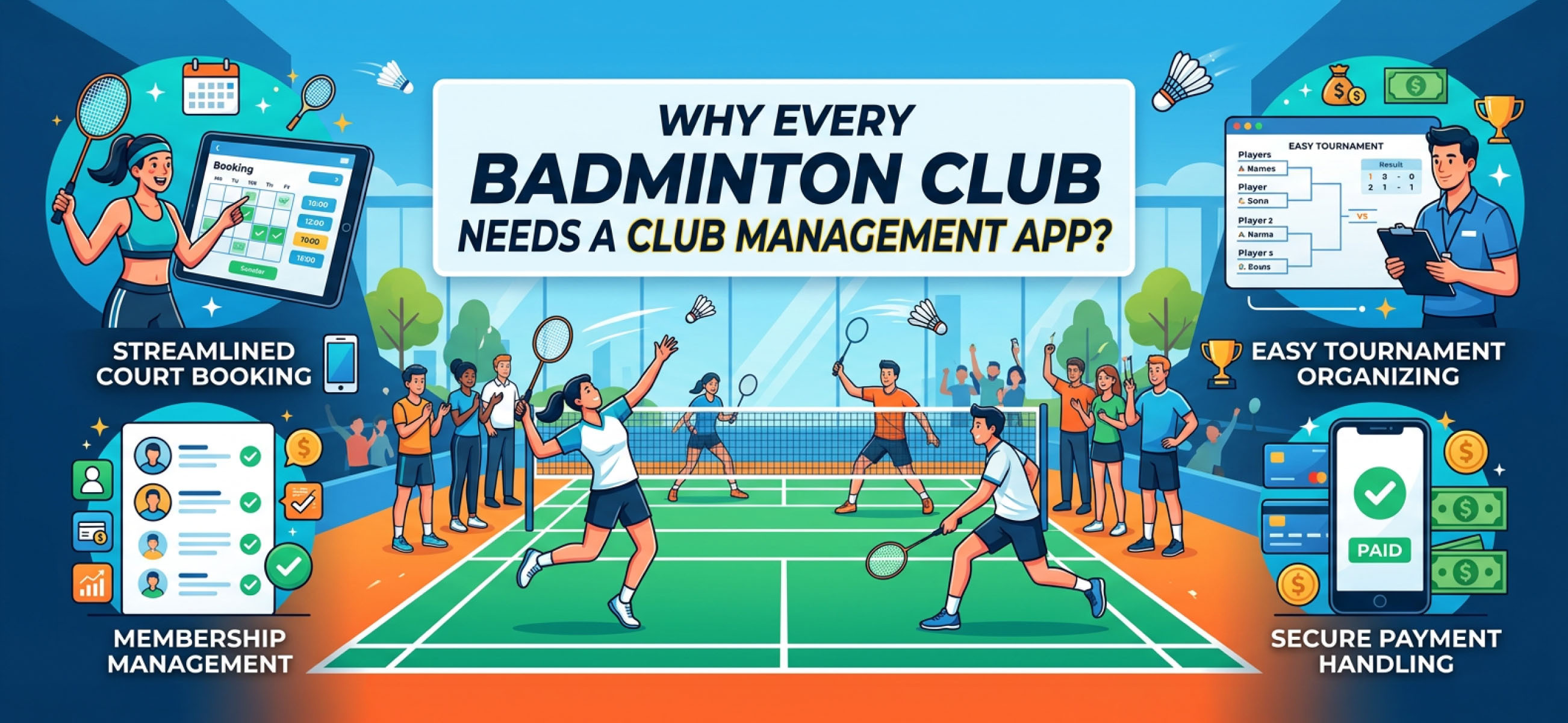
Why Every Badminton Club Needs a Club Management App
Learn how a badminton club management app simplifies memberships, bookings, payments, and tournaments while helping clubs stay organized and improve the player experience.
Read More >Yug Shah|Jul 27, 2026|5 min read

Badminton
Best Badminton Auction App for Clubs & Leagues in 2026
Looking for a Badminton Auction App in 2026? Compare the features clubs and leagues should check before choosing a platform like The 12th Men.
Read More >Yug Shah|Jul 13, 2026|5 min read