Pickleball Club Registration Software: Features Every League Needs

By Yug Shah
|
Aug 21, 2026
|
|
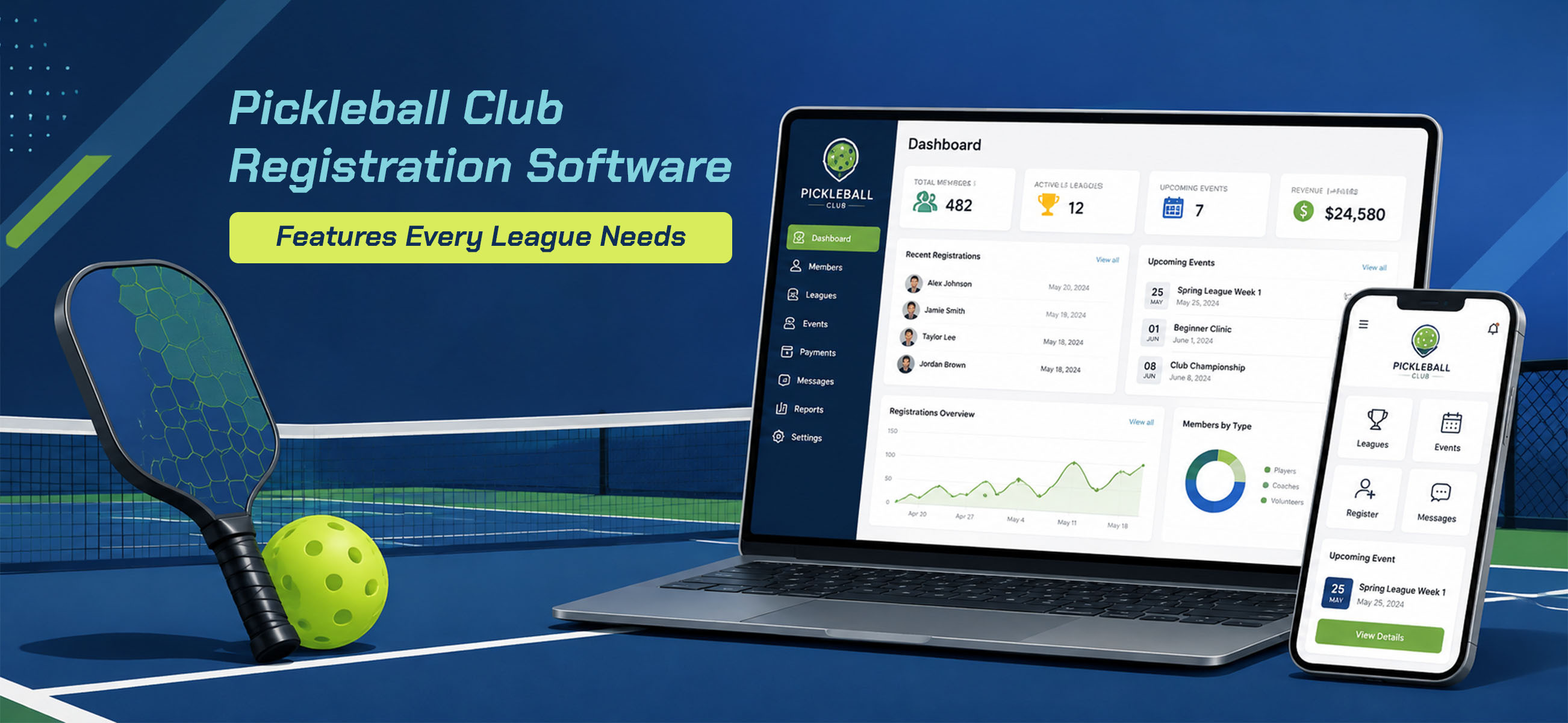
Running player registration sounds simple until a league starts getting dozens or hundreds of entries. Pickleball Club Registration Software helps bring those entries into one organized flow instead of leaving names across WhatsApp, forms, spreadsheets, phone calls, and handwritten lists. Organizers still need to check payments, confirm eligibility, create teams, and make sure the right players appear in the tournament schedule.
That is where a connected registration system can make a real difference. It gives organizers one place to collect player information, track payments, manage teams, and prepare players for upcoming matches.
For clubs and leagues that are growing, the goal is not to add more software for the sake of it. The goal is to remove the small administrative problems that keep showing up every season.
Quick Summary / Key Takeaways
- A good player registration system should collect complete and accurate player information.
- Online registration reduces manual data entry and scattered spreadsheets.
- Payment tracking should be connected to each player's registration.
- Team management becomes easier when player records are organized from the start.
- Tournament organizers should be able to filter players by category, age, skill level, or other criteria.
- Registration data should connect with tournament management and live scoring.
- The 12th Men brings registration, team management, tournament operations, payment collection, and live scoring into one sports management platform.
Why Player Registration Needs More Than a Basic Form
A basic online form can collect a player's name, phone number, and email. That may work for a small friendly match.
League organizers deal with much more.
A player may register for singles, doubles, or multiple categories. The organizer may need to know the player's skill level, preferred playing category, club membership, emergency contact, payment status, and availability.
A common mistake we see is collecting this information first and figuring out how to manage it later.
That creates duplicate records and unnecessary follow-up work.
A proper Pickleball Club Management Software system should treat registration as the starting point of the entire player journey, not as an isolated form.
| Basic Registration Form | Complete Registration System |
|---|---|
| Collects player details | Collects structured player profiles |
| Manual payment checking | Payment status linked to registration |
| Separate spreadsheets | Centralized player database |
| Manual team creation | Team management support |
| Separate tournament records | Registration connected with tournaments |
| Limited reporting | Player and registration reports |
1. Custom Player Registration Fields
Every league has slightly different requirements.
A pickleball club may need:
- Full name
- Date of birth
- Gender
- Phone number
- Email address
- Club membership
- Playing category
- Skill level
- Preferred partner
- Emergency contact
- Player photo
- Waiver or consent
- Payment details
The registration system should allow organizers to capture the information they actually need.
For example, a junior pickleball league may require age verification, while an adult club tournament may focus more on skill level and membership status.
This flexibility prevents organizers from collecting everything manually later.
2. Online Registration for Players

Players should not have to message an organizer just to enter a tournament.
With Online Pickleball Registration Software, players can complete registration from their phone or computer. Organizers receive the information in a structured format instead of copying details from messages into spreadsheets.
We've noticed that this becomes especially useful when registrations open for a popular tournament. Most players want a quick process. If registration takes too long, incomplete entries become a recurring problem.
A good registration flow should be:
- Select the tournament or league.
- Choose the playing category.
- Enter player details.
- Add partner information if required.
- Review the registration.
- Complete payment.
- Receive confirmation.
3. Player Category and Eligibility Management
Not every player belongs in every category.
A league may divide players by:
- Age
- Gender
- Skill level
- Singles or doubles
- Junior or senior category
- Club membership
- Rating
- Experience level
The registration system should make these categories clear before a player submits an entry.
This reduces one of the most common problems organizers face: players registering for the wrong category and needing manual corrections later.
4. Payment Collection and Status Tracking
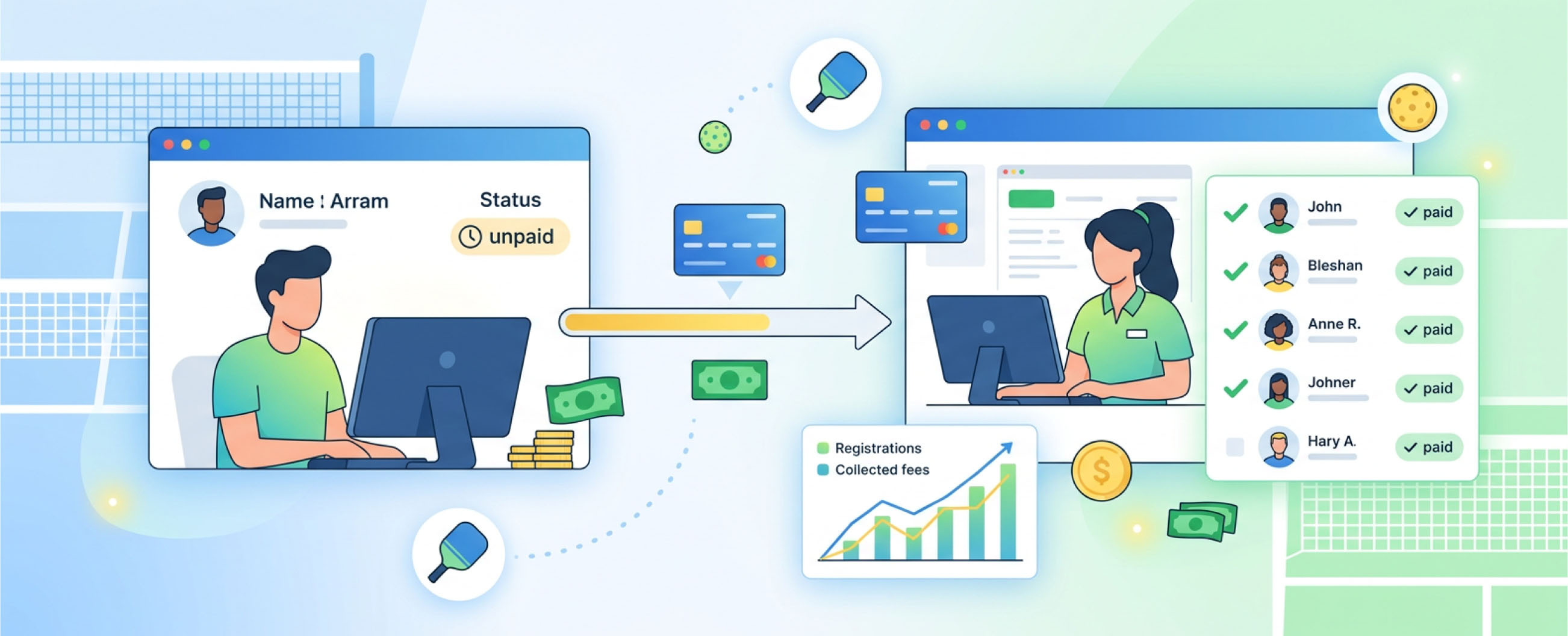
Registration is only complete when the organizer knows whether the fee has been paid.
A good system should show payment status against each registration.
| Registration Status | What the Organizer Can See |
|---|---|
| Registered | Player has submitted details |
| Payment Pending | Registration submitted but payment is incomplete |
| Paid | Entry fee received |
| Confirmed | Player is approved for participation |
| Cancelled | Registration is no longer active |
The Payment Collection feature becomes especially useful when a league has several registration categories with different fees.
Instead of checking bank statements and spreadsheets separately, organizers can quickly identify pending payments and confirmed entries.
5. Team Management After Registration
Player registration often leads directly into team creation.
This is where Team Management becomes useful.
Suppose a pickleball league receives 120 player registrations. Twenty players have already selected partners, while the rest need to be assigned.
Doing this manually in a spreadsheet can become confusing very quickly.
A connected system can help organizers maintain player profiles while assigning players to teams or pairs.
For larger clubs, Pickleball League Management Software should make it easier to keep registration and team records connected.
A simple example
Imagine a club runs a weekend doubles league with 60 players.
Without a structured system:
- Player details sit in one spreadsheet.
- Partner requests are stored in WhatsApp.
- Payments are tracked separately.
- Team names are maintained in another sheet.
- Match schedules are created manually.
With a connected platform, these records can be managed from the same player and league data.
That saves time and reduces the chance of assigning the wrong player.
6. Tournament Registration and Match Preparation
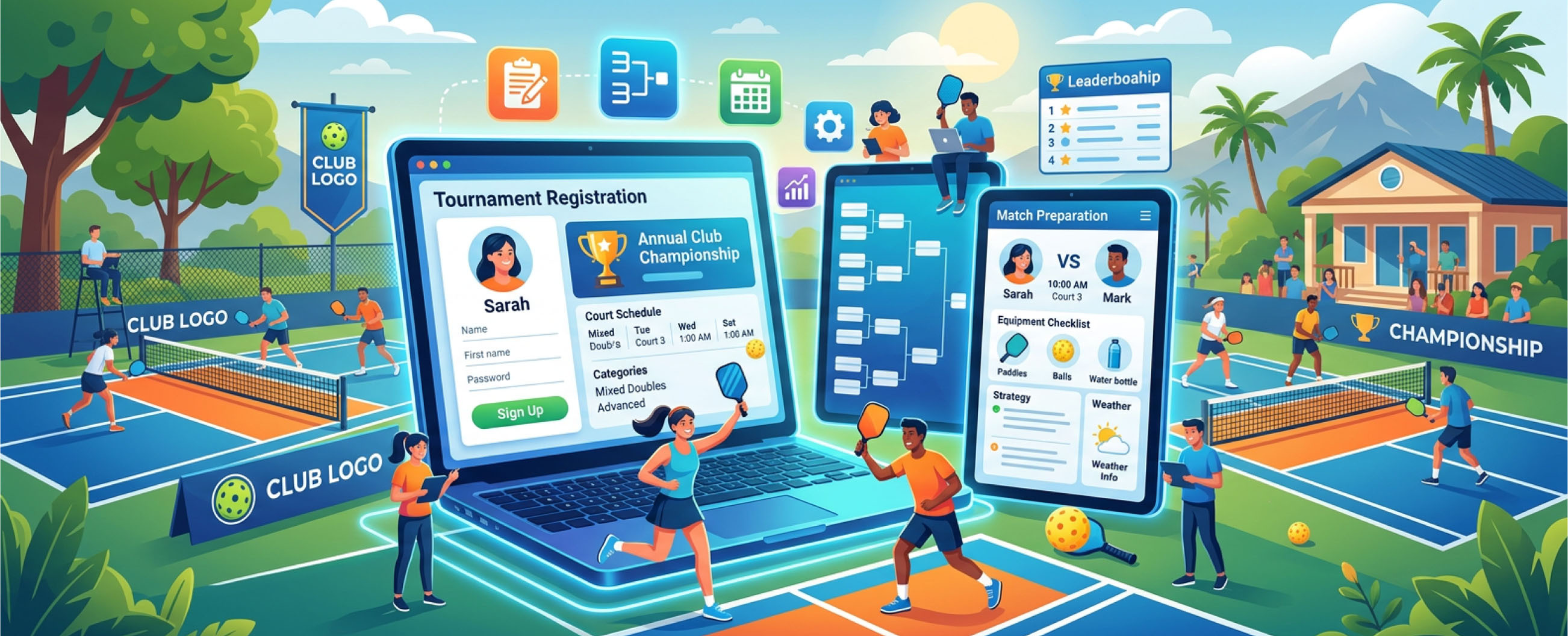
Registration should not end when a player clicks "Submit."
The information collected during registration can be used to prepare the tournament.
This is where Pickleball Tournament Management Software becomes useful.
Organizers can use registered player information when preparing:
- Categories
- Teams
- Fixtures
- Match schedules
- Player lists
- Tournament brackets
- Match records
The less information an organizer has to enter twice, the fewer mistakes there are.
This principle is common across sports. The International Cricket Council (ICC), for example, maintains structured competition and player information across its cricket operations. A local pickleball league works on a much smaller scale, but the basic idea is similar: clean player data helps the competition run smoothly.
7. Player Approval and Verification
Not every registration should automatically become a confirmed entry.
Some leagues need to check membership, age, payment, or eligibility before accepting a player.
A registration system should give organizers control over approval.
For example:
Submitted, verified, payment confirmed, approved, and added to tournament
This is particularly useful for clubs that have limited slots.
If a tournament has 64 available places, organizers need a clear view of who has completed the required steps and who is still waiting.
8. Registration Limits and Capacity Control
A league should know when a category is full.
Imagine a tournament has:
- 32 singles slots
- 32 doubles teams
- 16 junior players
If registrations continue without capacity control, organizers may have to contact players manually and explain that the category is already full.
Registration software can help display available capacity and prevent unnecessary overbooking.
This also gives players a clearer experience because they know whether registration is still open.
9. Player Communication
Registration creates a natural communication channel between the organizer and player.
Important messages may include:
- Registration confirmation
- Payment confirmation
- Schedule updates
- Venue information
- Match timings
- Category changes
- Tournament announcements
The system should make it easier to maintain accurate contact information.
One thing that often gets overlooked is outdated phone numbers or email addresses. A clean player profile makes future communication much easier.
10. Live Scoring After Registration

Registration data becomes even more useful once matches begin.
If the same player records are connected with Live Scoring, organizers do not have to create new player profiles for every match.
A player registered for a tournament can appear in the relevant match and scoring records.
For a growing club, this creates a clearer flow:
Registration, teams, fixtures, matches, live scoring, and results
That is much easier to manage than separate systems for every stage.
Which Registration Features Matter Most?
Not every league needs every feature on day one. The right setup depends on the club's size and the type of competitions it runs.
| League Size | Recommended Features |
|---|---|
| Small club | Player registration, categories, payment tracking |
| Growing club | Registration, team management, payment collection, player approval |
| Large league | Registration, teams, tournament management, capacity control, live scoring |
| Multi-tournament club | Central player profiles, registrations, payments, scheduling, scoring, reporting |
The key is to choose features that solve real operational problems.
How The 12th Men Fits Into the Registration Process
For sports organizers, Sports Event Management Software can connect several parts of league administration rather than treating registration as a standalone task.
The 12th Men brings together features such as:
- Player Registration for collecting participant information
- Team Management for organizing players and teams
- Tournament Management for handling competition operations
- Payment Collection for tracking registration fees
- Live Scoring for keeping match results updated
For a growing pickleball club, this means the same player information can support multiple stages of the event.
That matters when a club moves from running occasional tournaments to managing regular leagues, multiple categories, and larger player groups.
Common Player Registration Mistakes to Avoid
Many clubs run into the same registration problems every season.
Collecting too little information
If organizers later need skill level, partner preference, or emergency contact details, they have to chase players individually.
Using multiple spreadsheets
One sheet for players and another for payments may look manageable at first. As registrations grow, keeping both updated becomes difficult.
Not checking payment status
A player may think they are registered while the organizer considers the entry incomplete.
No registration deadline control
Leaving registration open without a clear closing date can create last-minute administrative work.
Re-entering player data
If the same player participates in several tournaments, entering their details from scratch each time wastes time and increases errors.
What Should a Growing Pickleball Club Look For?
Before choosing a registration platform, organizers should ask a few practical questions:
- Can players register online?
- Can registration fields be customized?
- Can the system handle different categories?
- Can payments be tracked?
- Can players be assigned to teams?
- Can registration data support tournament scheduling?
- Can organizers manage player approvals?
- Can match results connect with player records?
- Can the platform support future tournaments and leagues?
If the answer is yes across these areas, the software is doing more than collecting forms. It is supporting the full competition workflow.
Final Thoughts
A growing league quickly exposes the limits of manual registration. What works for 20 players can become difficult when registrations reach 100, 200, or more.
The right registration system should make the organizer's job easier from the first signup through the final match. Player profiles, payments, teams, tournaments, and scores should work as parts of the same process.
For clubs planning to grow, that is the real value of having a connected system.
Ready to simplify your league registration?
Explore how The 12th Men can help manage player registration, teams, tournaments, payments, and live scoring from one platform. Start building a more organized sports management workflow for your club today.
FAQ
Got Questions? We've Got Answers.
Pickleball Club Registration Software helps clubs collect player information, manage registrations, track payments, organize categories, and prepare players for leagues or tournaments.
Core features should include online registration, custom player fields, category management, payment tracking, player approval, team management, and tournament connectivity.
Yes. Pickleball Tournament Management Software can connect player registrations with categories, teams, fixtures, schedules, and match operations.
Payment tracking helps organizers quickly identify paid, pending, confirmed, and cancelled registrations without maintaining separate payment spreadsheets.
Yes. When registration and Live Scoring work together, player information can carry into matches and results, reducing duplicate data entry. For growing clubs, Pickleball Club Registration Software keeps that flow connected from signup to final results.
Related Articles
Pickleball
Why Your Pickleball League Needs a Pickleball Auction Platform
Run fair player auctions, build balanced teams, and manage your pickleball league more easily with a pickleball auction platform.
Read More >Yug Shah|Jul 31, 2026|
Pickleball
How Pickleball League Software Simplifies League Management
See how pickleball league software helps organizers manage registrations, fixtures, live scoring, standings, and league operations from one platform.
Read More >Yug Shah|Jul 24, 2026|