Cricket Scoring Rules Explained for Beginners
By Yug Shah
|
Mar 16, 2026
|
|
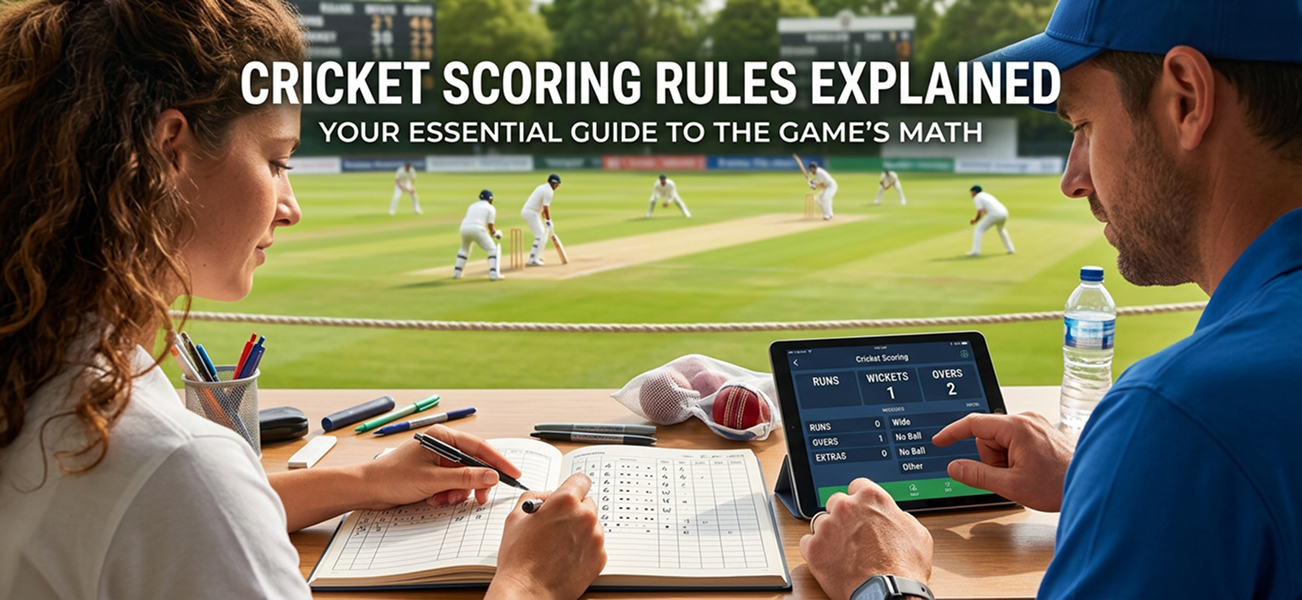
Cricket can look confusing when you watch it for the first time. The scoreboard keeps changing. Runs appear quickly. Sometimes the score moves even when the batsman does not hit the ball.
New fans often ask simple questions.
How do teams score runs?
What is an extra?
Why does the score increase when the ball misses the bat?
This guide explains cricket scoring rules in a simple way. If you are new to the sport, you will understand how the scoreboard works, how runs are counted, and why every ball matters.
In our experience, once people understand scoring, cricket becomes far more enjoyable. You start noticing small moments in the game that casual viewers miss.
Let us start with the basics.
What Is Cricket Scoring?
Cricket scoring simply means how runs are added to a team’s total during a match.
Each team tries to score more runs than the opponent. The team with the highest total wins.
Runs come from several situations:
- Batsmen running between the wickets
- Boundaries like fours and sixes
- Extras such as wides and no balls
- Overthrows or fielding mistakes
At first glance it feels complicated. Once you learn the categories, the scoreboard starts making sense.
Basic Structure of a Cricket Scoreboard

Before learning the rules, it helps to understand the scoreboard.
A standard cricket score shows:
- Runs scored by the team
- Wickets lost
- Overs completed
- Individual batsman scores
- Extras
Example scoreboard:
India: 145/4 (18 overs)
This means:
- Team has scored 145 runs
- Lost 4 wickets
- Played 18 overs
We noticed that beginners often watch the game without knowing what these numbers represent. Once you understand this format, following the match becomes much easier.
How Batsmen Score Runs
The most common way to score runs is by running between the wickets.
When a batsman hits the ball into the field, both batsmen run to the opposite crease. Each successful run adds one run to the team total.
They can run:
- 1 run
- 2 runs
- 3 runs
- Rarely 4 runs by running
The fielding team tries to stop the ball and return it quickly to prevent more runs.
When we worked with a client building a cricket statistics dashboard, we noticed that most scoring events during a match come from singles and doubles rather than big shots.
Boundary Runs in Cricket

Sometimes the ball travels far enough to reach the boundary rope.
Two types of boundary runs exist.
Four Runs
A four happens when the ball touches or crosses the boundary after touching the ground.
Team earns 4 runs instantly.
Batsmen do not need to run.
Six Runs
A six happens when the ball crosses the boundary without touching the ground.
Team earns 6 runs instantly.
These shots often excite fans because they change the score quickly.
For new fans, the easiest way to remember scoring is this.
- Run between wickets = 1 or more runs
- Ball reaches boundary after bounce = 4 runs
- Ball clears boundary in air = 6 runs
Extras in Cricket Scoring
Extras are runs that are not scored by the batsman’s bat but still count for the team.
This is one of the most confusing parts of cricket scoring rules for beginners.
Extras come in several types.
Wide Ball
A wide happens when the bowler delivers the ball too far from the batsman to hit.
Result:
- 1 run added to the batting team
- Ball must be bowled again
No Ball
A no ball occurs when the bowler breaks a rule while delivering the ball.
Common reasons include:
- Overstepping the crease
- Dangerous high delivery
Result:
- 1 run added
- Free hit in limited overs cricket
Bye Runs
A bye occurs when the ball passes the batsman and wicketkeeper, allowing batsmen to run.
Runs are added as extras.
Leg Byes
A leg bye happens when the ball hits the batsman’s body instead of the bat, and the batsmen run.
These runs are counted as extras as well.
What Is an Over in Cricket?
An over consists of six legal deliveries bowled by a bowler.
After six balls:
- A different bowler usually takes over from the other end.
Overs help structure the match.
Example formats:
- T20 cricket = 20 overs per team
- One Day cricket = 50 overs per team
- Test cricket = unlimited overs
Understanding overs helps new fans see how quickly the scoring pace changes during a match.
How Wickets Affect Scoring
Runs are important. Wickets are just as important.
A team can lose 10 wickets before their innings ends.
Common ways a batsman gets out:
- Bowled
- Caught
- Run out
- LBW
- Stumped
Every wicket slows scoring momentum because a new batsman needs time to settle.
In our experience, new viewers often focus only on runs. Experienced fans watch the wicket column closely because it tells the real story of the match.
Strike Rate and Scoring Speed
Modern cricket focuses heavily on scoring speed.
Strike rate measures how quickly a batsman scores runs.
Formula:
Strike Rate = (Runs Scored / Balls Faced) × 100
Example:
- 50 runs from 25 balls
- Strike rate = 200
A study by sports researchers at Loughborough University analyzing limited overs cricket found that teams with higher strike rates during middle overs often win more matches.
This research highlights how scoring pace shapes modern cricket strategy.
Powerplay and Scoring Opportunities

In limited overs cricket, matches include powerplay overs.
During powerplay:
- Fielding restrictions apply
- Fewer players allowed outside the circle
This encourages aggressive batting and faster scoring.
T20 cricket powerplay usually lasts 6 overs.
Teams often try to score heavily during this phase.
Overthrows and Bonus Runs
Sometimes the fielding team makes mistakes while trying to stop runs.
Example situations:
- Throw misses the wicketkeeper
- Ball travels further toward boundary
These mistakes allow batsmen to run extra runs.
These runs are still counted in the total score.
For beginners, this explains why scores sometimes increase suddenly even without big shots.
Scorecards and Match Statistics
Modern cricket relies heavily on digital scorecards.
Scorecards track:
- Individual batsman runs
- Balls faced
- Strike rate
- Bowler figures
- Extras
- Partnerships
When we worked with a sports analytics client, we noticed how detailed scoring data helps teams analyze patterns and player performance.
Fans now enjoy the same data through apps and platforms.
Why Understanding Cricket Scoring Makes the Game More Fun
Many new fans stop watching cricket because the scoring seems confusing.
Once you learn the rules, the experience changes.
You begin to notice:
- Smart singles
- Strategic field placements
- Pressure created by dot balls
- Momentum shifts
Even small scoring moments start to feel exciting.
That is why beginner friendly tools and apps are becoming popular among new cricket audiences.
How the 12th Men App Helps Fans Track Cricket Scores
For new fans, keeping track of scoring rules during a live match can be tricky.
This is where The 12th Men app becomes very helpful.
The app is built for cricket lovers who want quick access to match details and tournament updates.
Features include:
- Live match scoring
- Player statistics
- Team standings
- Tournament management
- Real time updates
In our experience, beginner fans learn the game faster when they follow matches through apps that clearly display scoring breakdowns.
We noticed that platforms like The 12th Men simplify cricket data and make it easier to understand scoring events ball by ball.
Cricket Auctions and Player Value

Scoring ability also influences player auctions in professional leagues.
Teams analyze:
- Strike rate
- Boundary percentage
- Average runs
These numbers help determine how much a player is worth during auctions.
If you want to understand how scoring statistics influence team selections and auction decisions.
This connection between scoring performance and player value makes cricket even more interesting for fans.
Common Beginner Questions About Cricket Scoring
Why does the score increase without the batsman hitting the ball?
This usually happens because of extras like wides, no balls, or byes.
Do runs from extras count toward batsman statistics?
No. Extras are added to the team total but not to the batsman's personal score.
Can a batsman score runs without hitting the ball?
Yes. Leg byes and byes allow runs even without bat contact.
What happens if the ball hits the boundary after an overthrow?
The batting team gets:
- Runs completed during the play
- Plus boundary runs
Simple Example of a Cricket Scoring Sequence
Imagine this over in a T20 match:
Ball 1: Batsman hits single
Ball 2: Dot ball
Ball 3: Four runs
Ball 4: Wide ball
Ball 4 again: Two runs
Ball 5: Wicket
Ball 6: Six runs
Total runs in the over = 14 runs
Situations like this show how quickly scoring can change within just six deliveries.
Final Thoughts for New Cricket Fans
Cricket scoring rules may look complex at first. After watching a few matches with this knowledge, the scoreboard will start making sense.
Remember the basics:
- Runs come from running and boundaries
- Extras add bonus runs
- Overs structure the match
- Wickets control momentum
In our experience, new fans who learn these simple scoring rules begin to enjoy cricket much more. The game becomes easier to follow and every run starts to matter.
If you want to explore more cricket insights, match updates, and tournament tools, platforms like The 12th Men provide a great starting point for both beginners and experienced fans.
Once you understand scoring, cricket stops looking confusing. It starts feeling like a story unfolding ball by ball.
Related Articles

Cricket
How Real-Time Bidding Improves the Cricket Auction Experience
Learn how real-time bidding makes cricket auctions easier by helping teams track bids, budgets, players, and auction results in one place.
Read More > Yug Shah|Aug 24, 2026|
Cricket
Turf Cricket Tournament App for Modern Organizers
Learn how a turf cricket tournament app helps organizers manage registrations, fixtures, live scoring, player auctions, and tournament operations with less manual work.
Read More >Yug Shah|Jul 29, 2026|