How Cricket Analytics Can Improve Your Team Performance

Table of contents
Cricket is a game of skill, timing, and instinct. Every fan knows that. But modern cricket has added something else into the mix. Data.
Coaches today are no longer relying only on gut feeling or match memory. They are using numbers to understand what is really happening on the field. That is where cricket analytics comes in.
Teams that use analytics consistently make smarter decisions. They plan better matchups. They spot weaknesses earlier. They also improve faster because they know what to fix.
This guide explains how cricket analytics works, why it matters, and how coaches and data fans can use it to lift team performance in real matches.
What Is Cricket Analytics?
Cricket analytics is the use of match data to measure performance and guide decisions.
It helps you answer questions like:
- Which batter struggles against short-pitched bowling?
- Which bowler performs best in the death overs?
- What is our weakest phase in a T20 innings?
- Which fielding positions leak the most runs?
- Are we losing matches due to poor powerplay planning?
Cricket analytics is not just for professional teams. It can help club teams, academies, league squads, and even fantasy cricket players.
Why Cricket Analytics Matters More in 2026

Cricket has become faster.
T20 leagues are everywhere. Players are more aggressive. Matches shift in two overs. Captains have seconds to make decisions.
That speed creates pressure.
Once the data highlighted patterns, their match planning improved immediately.
This is why cricket analytics is becoming a must-have tool, not a luxury.
The Rise of Data in Modern Cricket
Cricket is now one of the most data-rich sports in the world.
Every match generates:
- Ball-by-ball information
- Player scoring zones
- Wagon wheels
- Pitch maps
- Dismissal trends
- Bowling lengths and lines
- Fielding positions
- Win probability charts
A well-known academic paper by Lemmer (2011) discusses how performance measurement in cricket has evolved and how data has become essential for modern evaluation.
This is exactly what we see today. Cricket is no longer just watched. It is measured.
How Cricket Analytics Improves Team Performance
Let's get practical.
Cricket analytics improves performance in three major areas:
- Player development
- Match strategy
- Team selection
When used correctly, it gives teams a competitive edge without changing their playing style.
1. Cricket Analytics Helps Coaches Identify Real Strengths

Many players believe they know their strengths.
Some are right. Some are not.
A batter may say, "I am great against spin." But the data might show their strike rate drops sharply against left-arm orthodox bowling.
A bowler may believe they are strong in the death overs. But their economy rate could be worse than expected.
Cricket analytics replaces assumptions with clarity.
Coaches often discover hidden strengths in players that were not obvious during training sessions.
Examples of Strength Metrics Coaches Track
Here are common performance indicators.
Batting Metrics
- Strike rate by phase
- Boundary percentage
- Dot ball percentage
- Dismissal type frequency
- Average against pace vs spin
Bowling Metrics
- Economy by over range
- Wickets per match
- Dot ball percentage
- Bowling length accuracy
- Performance against left-handers vs right-handers
Fielding Metrics
- Catch success rate
- Run-out involvement
- Boundary saves per match
- Misfield frequency
When coaches see these patterns, training becomes more focused.
2. Analytics Helps You Understand Match Phases
Cricket is not one continuous game. It is divided into phases.
In T20 cricket, these phases are usually:
- Powerplay (overs 1 to 6)
- Middle overs (overs 7 to 15)
- Death overs (overs 16 to 20)
In ODI cricket, it often becomes:
- Early overs (1 to 10)
- Middle overs (11 to 40)
- Final overs (41 to 50)
Each phase has different demands.
Cricket analytics helps teams understand which phase they dominate and which phase they consistently lose.
Once they trained against that weakness, their scoring rate improved.
What Coaches Should Track by Phase
A good analytics approach tracks:
- Runs scored per over
- Wickets lost per phase
- Dot ball percentage per phase
- Boundary frequency per phase
This data quickly reveals the story behind a match.
3. Cricket Analytics Improves Team Selection
Selection is one of the toughest coaching decisions.
It is also where emotions often interfere.
Analytics supports selection by answering questions like:
- Who performs best on slow pitches?
- Which batter handles high-pace bowling?
- Which bowler performs best under pressure?
- Who is reliable against left-handed batters?
Data does not replace coaching instinct. It supports it.
A research paper by Sankaranarayanan, Sattar, and Lakshmanan (2014) explored ODI cricket simulation and prediction, showing how statistical patterns can support match-outcome forecasting.
This kind of modeling is now common in modern cricket analysis.
How Teams Use Analytics for Selection
Here is what smart teams do:
- Build player profiles based on match performance
- Compare players by role, not popularity
- Track consistency across seasons
- Match players to pitch conditions
Analytics makes selection more defensible and less controversial.
4. Cricket Analytics Helps Improve Batting Strategy
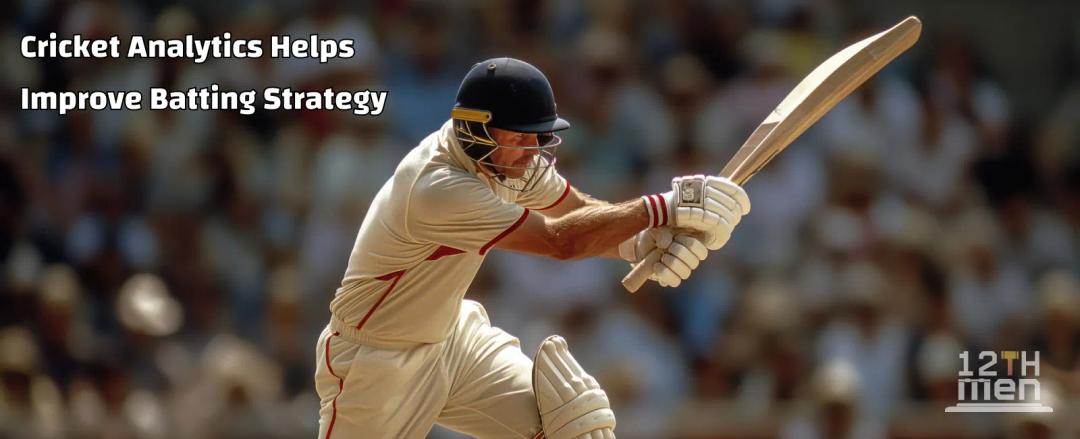
Batting is not just about hitting. It is about scoring smart.
Analytics helps coaches and batters answer:
- Where does the batter score most?
- Where does the batter get out most?
- Which bowlers cause the most trouble?
- Which shots are safest under pressure?
These insights shape better shot selection.
Common Batting Analytics Tools
Coaches often rely on:
- Wagon wheel charts
- Heat maps
- Dismissal analysis reports
- Strike rate comparison tables
A wagon wheel might show a batter scores freely through covers but struggles on the leg side. That changes training plans instantly.
Better Match Planning Through Batting Analytics
Batting analytics also helps teams plan innings.
For example:
- A player with a high boundary percentage can be used as a finisher
- A player with a low dismissal rate can be used as an anchor
- A batter strong against spin can be promoted during the middle overs
This kind of planning improves total scores without changing the squad.
5. Cricket Analytics Improves Bowling Decisions
Bowling strategy is one of the most tactical areas in cricket.
Analytics helps captains and coaches decide:
- Who bowls the powerplay?
- Who bowls in the death overs?
- Which bowler should face a specific batter?
- Which bowling length is most effective on this pitch?
Coaches often use up their best bowler too early. They bowl them when the match is calm, and then struggle in the final overs.
Analytics fixes that mistake.
Bowling Metrics That Matter Most
Here are high-value bowling metrics:
- Economy rate by phase
- Strike rate by phase
- Boundaries conceded per over
- Dot ball percentage
- Wicket type breakdown
This data helps coaches assign clear roles.

6. Analytics Helps Improve Fielding Performance
Fielding wins matches. Everyone says it. Yet most teams still treat fielding as a general skill.
Analytics makes fielding measurable.
It tracks:
- Catch conversion rate
- Missed run-out chances
- Boundary saves
- Misfield locations
Once they started tracking fielding performance, they improved quickly. They stopped leaking easy singles. They also reduced dropped catches.
Small improvements add up fast.
Field Placement Analytics Is a Game-Changer
Analytics also helps with field setting.
Captains can use batter scoring zones to place fielders more intelligently.
Instead of guessing, they use evidence.
That is how professional teams shut down scoring areas.
7. Cricket Analytics Helps Reduce Injuries

This part is often overlooked.
Cricket injuries happen due to:
- Workload overload
- Fatigue
- Poor recovery
- Repetitive bowling spells
Analytics helps teams track workload.
This is especially important for fast bowlers.
Sports science research often highlights that injury risk rises when workload increases too sharply. Studies in cricket injury prevention often use workload tracking models to reduce risk.
A study by Dennis, Finch, and Farhart (2005) found that higher bowling frequency was associated with increased overuse-injury risk among Australian junior fast bowlers.
For coaches, this is useful knowledge.
Analytics is not only about winning. It is also about keeping players fit.
8. Analytics Helps Teams Build Better Game Plans
A match plan is not just "play well."
It is specific.
Analytics helps teams prepare by studying:
- Opposition batting weaknesses
- Opposition bowling patterns
- Pitch behavior trends
- Match conditions history
This allows coaches to build realistic strategies.
Examples of Match Plans Based on Analytics
A team might decide to:
- Bowl short to a batter weak against bounce
- Attack with spin early if the pitch grips
- Save a key bowler for overs 18 and 20
- Set a deep off-side field to stop cuts
These are small decisions.
They often decide the result.
9. Analytics Helps Fantasy Players Predict Performance

Fantasy players love cricket analytics because it gives them an edge.
Fantasy cricket is built around points.
Analytics helps predict:
- Who will bat longer
- Who will bowl more overs
- Who is likely to take wickets
- Who performs well at certain venues
Fantasy success is not random. It is informed decision-making.
This is why data fans follow match analytics closely.
10. Analytics Makes Coaching More Credible
This is a simple truth.
When a coach says, "You need to improve," players may argue.
When a coach says, "Your strike rate against spin drops to 98 after over 7," the player listens.
Data removes personal bias.
It makes coaching feedback clearer.
Teams become more disciplined when coaching is backed by measurable insights.
How to Start Using Cricket Analytics in Your Team
You do not need an expensive sports lab to start.
Start small.
Here is a simple process.
Step 1: Track Match Data Consistently
Record ball-by-ball details if possible.
Step 2: Organize Data by Player Role
Compare openers with openers. Bowlers with bowlers.
Step 3: Review After Every Match
Do not wait until the end of the season.
Step 4: Set 2 to 3 Improvement Goals
Too many goals create confusion.
Step 5: Repeat the Cycle
Analytics works when it becomes a habit.
Why The 12th Men Is the Best Platform for Cricket Analytics
Cricket analytics only works if you have clean and consistent match data.
That is where many teams struggle.
Manual scorebooks lead to missing details. Spreadsheet tracking becomes messy. Data gets lost. Teams stop reviewing it.
The 12th Men solves this problem by making match tracking structured and easy.
It supports cricket teams with:
- Match scoring and records
- Player statistics tracking
- Performance visibility across tournaments
- Clear match history and team profiles
That is exactly what The 12th Men enables.
The system is built for cricket. Not adapted from another sport. That matters.
What Coaches and Data Fans Gain From The 12th Men

If you are a coach, The 12th Men helps you:
- Identify weak match phases
- Track player improvement
- Build better lineups
- Support tactical planning
If you are a data fan, it helps you:
- Follow player stats
- Compare performance trends
- Study match patterns
- Enjoy deeper cricket storytelling
It brings cricket analytics closer to everyday cricket communities.
Key Cricket Analytics Metrics Every Coach Should Use
Here are high-impact metrics to focus on.
Batting Metrics
- Dot ball percentage
- Strike rate in overs 7 to 15
- Boundary percentage
- Dismissal type tracking
- Average against pace and spin
Bowling Metrics
- Economy in death overs
- Wickets per over range
- Dot ball rate
- Wide and no-ball count
- Performance against top-order batters
Fielding Metrics
- Catch success rate
- Runs saved per match
- Throw accuracy score
- Misfield count
You do not need to track everything. Track what affects wins.
Common Myths About Cricket Analytics
Let's clear up a few misconceptions.
Myth 1: Analytics Removes Instinct
No. It strengthens decision-making.
Myth 2: Analytics Is Only for Professionals
No. Local teams benefit the most because they can improve quickly.
Myth 3: Analytics Makes Cricket Boring
Not at all. It makes cricket easier to understand.
Myth 4: You Need AI to Do Analytics
You can start with simple score trends and phase analysis.
What Does the Future of Cricket Analytics Look Like?

Cricket analytics is heading toward:
- Real-time win probability tracking
- Automated player workload monitoring
- Better scouting databases
- Match simulation tools
- AI-based shot prediction
Yet the foundation remains the same.
Good data. Clean scoring. Consistent review.
Without that, even advanced systems fail.
Final Thoughts
Cricket has always been about skill.
But today, teams that understand the numbers behind the skill gain an edge.
Cricket analytics helps coaches train smarter. It helps captains plan better. It helps teams correct repeated mistakes. It even helps fans and fantasy players understand the game on a deeper level.
The biggest improvement happens when analytics becomes part of a weekly routine, not a one-time report.
If you want to bring structure to your performance tracking and build real match intelligence, platforms like The 12th Men make the process easier. They keep match data organized and accessible.
That is where modern cricket is heading.
And teams that adapt early will stay ahead.
For a connected analysis workflow, explore cricket analytics and insights and cricket tournament management software for organized match and player data.
Related Reading
- How Net Run Rate Is Calculated in Cricket Tournaments
- How We Calculate Net Run Rate (NRR) in Cricket Tournaments
- How We Calculate MVP (Most Valuable Player) in Cricket Matches
Continue with The 12th Men
Read next: Predicting Match Outcomes With Data - Beginner Guide
Need help setting up your event? Scoring and streaming set up for your event: live scorecards, points table, NRR and YouTube overlays.

Related Articles
Cricket
From Cricket Auction to Scorecard: Sync Squads Faster
Carry approved auction squads into tournament fixtures and scorecards without retyping players. Learn how to verify identities, team branding, match selections and standings before the opening fixture.
Read More > Yug Shah|Oct 29, 2026|

Cricket
Cricket Points Table Tie-Break Rules: Scoring Guide
Prevent qualification disputes by publishing the tie-break chain early. This guide explains how points, wins, net run rate, head-to-head results and other approved criteria should be ordered and applied consistently.
Read More >Yug Shah|Oct 27, 2026|