How We Calculate MVP (Most Valuable Player) in Cricket Matches
By Yug Shah
|
Mar 9, 2026
|
|
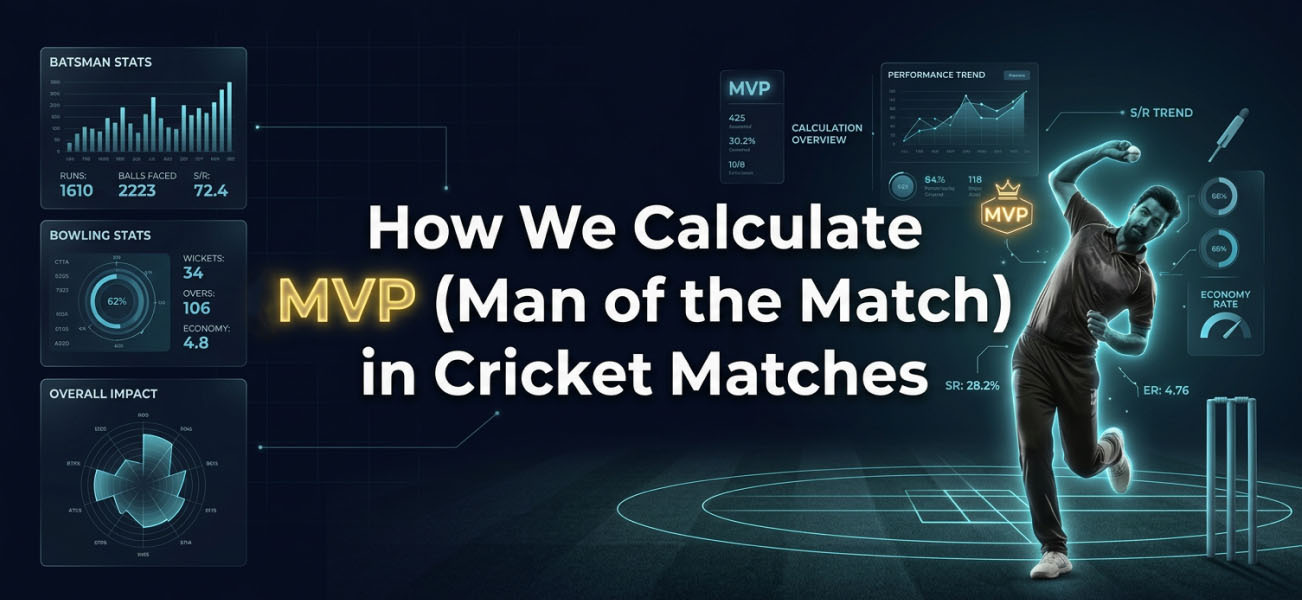
Cricket fans love debates. Who played better? Who changed the game? Who truly deserved the spotlight? That’s where the idea of MVP (Most valuable player) in cricket matches comes inand at The 12th Men, we don’t leave that decision to guesswork or popularity.
We calculate it.
Not randomly. Not emotionally. But through a structured approach that captures real impact on the match. Still, numbers alone don’t tell the whole story. Context matters. Pressure matters. Timing matters. Let’s break it down.
Why MVP Matters More Than Ever
A simple scoreboard rarely reflects the full picture. A player might score 70 runs, but was it when the team was 10/3? Or when everything was already under control?
That difference is everything.
MVP recognition isn’t just about the highest score or most wickets. It’s about influence. Who shifted momentum? Who turned a losing game around? Who delivered when it felt like the match was slipping away?
In our experience, fans appreciate fairness. Players respect it even more.
Our Core Approach to MVP (Most Valuable Player) in Cricket Matches

At The 12th Men, we follow a layered scoring model. It blends stats with match situations. Some parts are straightforward. Others need a closer look.
1. Batting Impact Score
Runs matter, but not all runs carry the same weight.
We evaluate:
- Total runs scored
- Strike rate (especially in T20s)
- Situation of the innings
- Partnerships built
For example, a quick 40 in a chase under pressure can outweigh a slow 80 when the team was already ahead.
We assign weighted points instead of flat scoring.
2. Bowling Effectiveness
Bowling can break a game open in minutes. One spell. Two wickets. Suddenly, everything changes.
We measure:
- Wickets taken
- Economy rate
- Type of wickets (top-order vs tailenders)
- Match phase (powerplay, middle overs, death overs)
A bowler who removes key players early often gets a higher score than someone cleaning up the lower order.
3. Fielding Contribution
Fielding is often overlooked. That’s a mistake.
A single run-out or catch can flip the match. We track:
- Direct run-outs
- Catches (difficulty level matters)
- Saved runs (tight fielding, boundary stops)
When we worked with a local tournament, one player didn’t bat much, but saved 15–20 runs in the field. That changed the final result. He ended up ranking among the top MVP contenders.
4. Match Situation Multiplier
This is where things get interesting.
We apply a multiplier based on:
- Pressure moments
- Match context
- Opposition strength
- Game format (T20, ODI, Test)
Performing under pressure gets extra weight. A calm finish in a tight chase? That gets noticed.
5. All-Round Performance Bonus
Players who contribute across departments get an added edge.
- Bat + Ball
- Ball + Field
- Bat + Field
These players often shape the match in more than one way. We make sure that gets reflected in their final MVP score.
The Formula (Simplified View)

While our full system runs deeper (especially in software-driven tournaments), here’s a simplified version:
MVP Score = (Batting Score + Bowling Score + Fielding Score) × Match Impact Multiplier + All-Round Bonus
This allows us to balance raw numbers with real match influence.
Real Example: How It Works
Let’s say two players stand out:
Player A
- 75 runs (steady innings)
- No wickets
- Minimal fielding impact
Player B
- 35 runs (quick, match-saving)
- 2 wickets (top-order)
- 1 direct run-out
At first glance, Player A looks stronger. Bigger score. More runs.
But once we apply our model:
- Player B’s contributions came in high-pressure moments
- Bowling impact + fielding effort add extra value
- Match multiplier boosts performance under pressure
Result? Player B often comes out as MVP.
This is exactly why structured calculation matters.
How The 12th Men Makes It Easy

Manually calculating MVP scores can get messy, especially in large tournaments. That’s where The 12th Men steps in.
Our platform:
- Tracks player stats automatically
- Applies scoring logic in real-time
- Displays MVP rankings instantly
- Removes bias from decisions
Tournament organizers don’t have to argue or guess. Everything is clear. Transparent. Data-backed.
Common Mistakes in MVP Selection
We’ve seen this happen a lot:
- Picking the highest scorer every time
- Ignoring bowlers’ contributions
- Overlooking fielding impact
- Favoring popular players
These shortcuts create frustration among players. It also reduces trust in tournament decisions.
A fair system fixes that.
Can MVP Calculation Be Customized?

Yes, and it should be.
Different tournaments have different priorities. A local league might value aggressive batting more. A longer format might give more weight to consistency.
At The 12th Men, scoring models can be adjusted:
- Change weightage for batting vs bowling
- Adjust multipliers for match phases
- Include custom rules for leagues
That flexibility helps organizers run tournaments their way, without losing fairness.
Final Thoughts
The idea of MVP (Most valuable player) in cricket matches isn’t new. What’s changing is how we decide it.
Gut feeling is fading out. Structured scoring is taking over.
When every run, wicket, and fielding effort is measured with context, the result feels right. Players accept it. Fans agree with it. Organizers don’t have to defend it.
And that’s the goal.
Related Articles

Cricket
How Real-Time Bidding Improves the Cricket Auction Experience
Learn how real-time bidding makes cricket auctions easier by helping teams track bids, budgets, players, and auction results in one place.
Read More > Yug Shah|Aug 24, 2026|
Cricket
Turf Cricket Tournament App for Modern Organizers
Learn how a turf cricket tournament app helps organizers manage registrations, fixtures, live scoring, player auctions, and tournament operations with less manual work.
Read More >Yug Shah|Jul 29, 2026|