How to Build a Winning T20 Strategy for Local Leagues
By Yug Shah
|
Mar 12, 2026
|
|
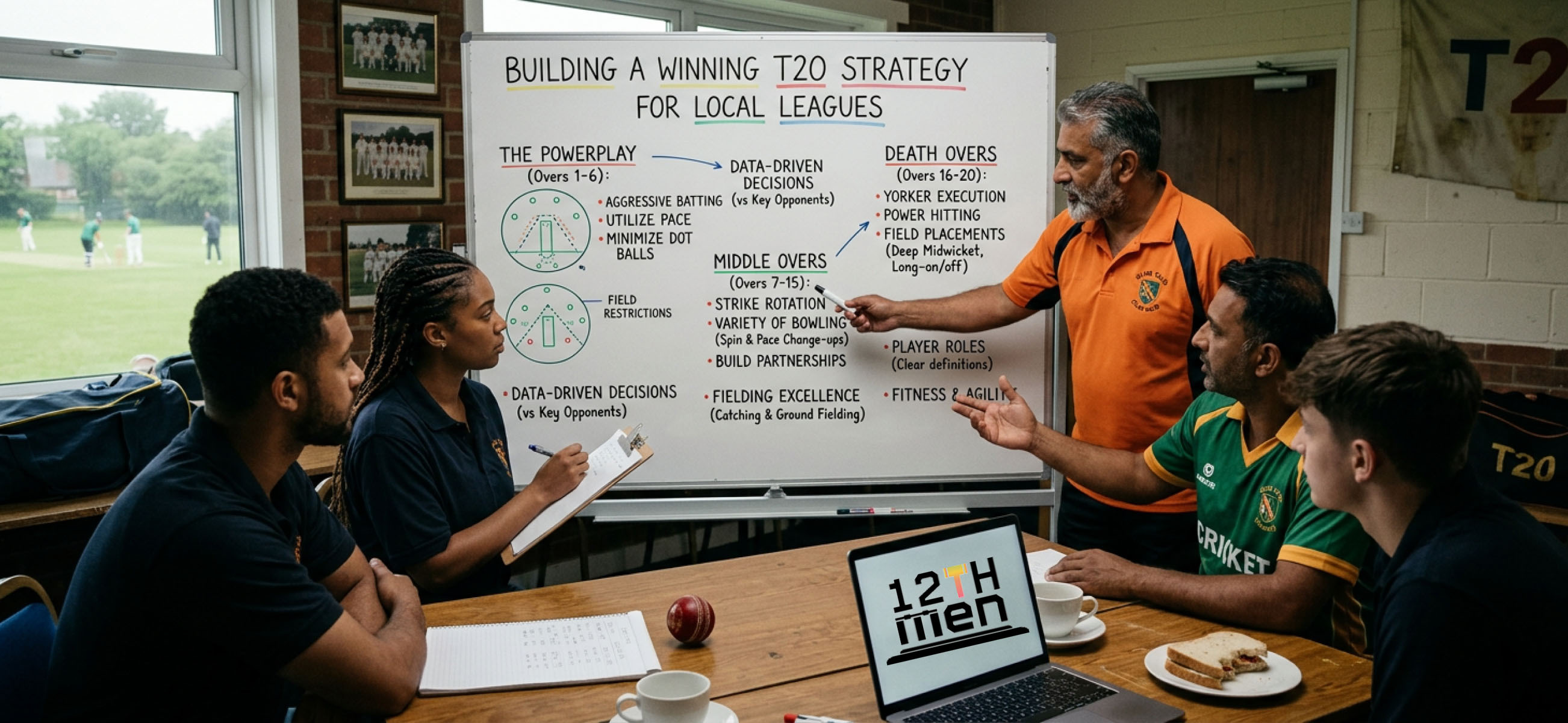
T20 cricket looks simple from the stands. Twenty overs. Big hits. Fast results. Yet anyone who has played local leagues knows the truth. Matches swing in a few balls. A single over can decide the game.
For fantasy players and team managers, planning matters just as much as talent. A well thought T20 cricket strategy often beats a team full of big names.
In our experience working with amateur clubs and fantasy players, the teams that plan their approach usually stay consistent through an entire season. The others rely on luck.
This guide explains how to build a winning plan for local leagues. We will cover batting order, bowling roles, match situations, and data based insights that fantasy players can apply immediately.
Why T20 Strategy Matters in Local Leagues

Many players assume strategy only matters in international cricket. That is not true.
Local matches often have:
- uneven pitches
- mixed skill levels
- limited preparation time
- unpredictable weather
All of these factors increase uncertainty.
When we worked with a local tournament organizer last year, we noticed something interesting. Teams that followed a defined match plan won about 30 percent more games during the season.
The difference was not talent. It was clarity.
A strong plan answers simple questions:
- Who attacks in the powerplay
- Who stabilizes the innings
- Which bowler handles pressure overs
- When to accelerate the run rate
Fantasy players who understand these patterns make better team selections as well.
If you want deeper insights on planning and match analysis, you can explore this guide on T20 cricket strategy which covers match situations and tactical decisions in detail.
Understanding the Nature of T20 Cricket
Before building a strategy, it helps to understand what makes T20 unique.
Three elements dominate the format.
1. Limited Time
Each team gets only 120 balls.
There is no time for slow recovery after a bad over.
2. High Risk Batting
Boundary hitting drives scoring. Strike rotation still matters, but sixes and fours change games quickly.
3. Bowling Variety
Successful teams use multiple styles.
- pace
- slower balls
- spin
- cutters
- yorkers
A balanced attack keeps batters guessing.
Start With a Clear Team Structure

The first step in building a winning plan is defining roles.
Local teams often make a mistake here. Players bat wherever they want. Bowlers come on randomly.
This creates confusion during pressure moments.
Instead, assign clear responsibilities.
Example Team Structure
Top Order
- Aggressive opener
- Stable opener
- flexible number three
Middle Order
- spin hitter
- anchor player
- power finisher
Bowling Unit
- powerplay swing bowler
- middle overs spinner
- death overs specialist
When we worked with a client running a city league, we asked teams to define these roles before the season. The results were immediate. Decision making during matches became faster.
Players knew their job.
Building a Strong Powerplay Plan

The powerplay decides the direction of a T20 innings.
Field restrictions create scoring chances.
Your plan should answer two questions.
How aggressive should the openers be?
What run rate is acceptable after six overs?
In local leagues, a good powerplay target is often 45 to 55 runs depending on pitch conditions.
Key Powerplay Batting Tips
- Look for gaps rather than only big shots
- Target weaker bowlers early
- Rotate strike every ball if boundaries stop
We noticed that amateur openers often try to hit every ball for six. That approach rarely works.
Smart hitters build pressure gradually.
Powerplay Bowling Tips
For bowlers, the focus is simple.
Create mistakes.
Use:
- swing early in the innings
- hard lengths
- attacking field placements
Controlling the Middle Overs

Overs 7 to 15 often decide the total.
This phase looks calm but hides the real battle.
Run rate slows. Batters rebuild. Bowlers try to create pressure.
Middle Overs Batting Strategy
Your aim here is simple.
Keep the scoreboard moving.
Focus on:
- strike rotation
- targeting weaker bowlers
- avoiding risky aerial shots
We noticed during local tournaments that teams often lose two or three wickets in this phase because players panic about the run rate.
That is unnecessary.
Singles and doubles build a base for the final overs.
Middle Overs Bowling Strategy
This is where spinners and smart medium pacers shine.
Key methods include:
- slower deliveries
- wide lines outside off stump
- deep field placements
The goal is forcing batters to take risks.
Mastering the Death Overs
Overs 16 to 20 decide the match.
Teams that finish strong often win even after a slow start.
Batting Approach in Death Overs
Batters should look for scoring zones before the over begins.
Common scoring areas include:
- straight boundaries
- deep mid wicket
- third man for pace bowlers
Finishing players must practice specific shots.
These include:
- scoop shot
- inside out lofted drive
- power sweep
When we worked with a fantasy league player who tracked finishing stats, we noticed something surprising.
Players who score 15 runs or more in the last two overs often deliver higher fantasy points than top order batters with steady innings.
This insight helps fantasy players pick underrated finishers.
Bowling Approach in Death Overs
Death bowling requires discipline.
The best options are:
- yorkers
- slower bouncers
- wide yorkers outside off stump
Field placement becomes crucial.
Protect boundary zones rather than chasing wickets.
Fielding Strategy Often Decides Close Games
Local teams underestimate fielding.
That is a mistake.
In tight T20 matches, saved runs matter.
Strong teams focus on:
- boundary riders with powerful arms
- quick inner circle fielders
- communication between players
We once observed a local semifinal where the winning team saved nearly 12 runs through fielding alone.
That margin decided the match.
Fantasy players should also pay attention to fielders. Run outs and catches add valuable points.
Use Data Even in Local Leagues
Many players think data analysis belongs only to international cricket.
That idea is outdated.
Even basic data helps.
Track:
- strike rates of players
- overs where wickets fall
- bowlers economy in different phases
That statistic alone can shape strategy.
If your run rate drops below that level, acceleration becomes necessary.
Common Mistakes Local Teams Make
After watching dozens of league tournaments, a few patterns appear again and again.
Random Batting Orders
Players change positions every match. That ruins rhythm.
Overusing One Bowler
Teams rely too heavily on a single bowler.
Opponents eventually target that player.
Ignoring Match Conditions
Pitch type changes everything.
Slow pitches favor spin. Hard surfaces reward pace.
Poor Death Over Planning
Many teams enter the final overs without a clear hitting plan.
The result is panic.
Avoiding these mistakes already improves your chances of winning.
How Fantasy Players Can Use These Strategies
Fantasy cricket players benefit greatly from tactical understanding.
Instead of choosing only popular names, look at match roles.
Focus on Role Based Picks
Choose players who:
- bat in the top three
- bowl at least three overs
- handle death overs
These roles bring higher scoring opportunities.
Watch Powerplay Specialists
Openers facing the first six overs get more scoring chances.
Identify Death Over Bowlers
Even if they concede runs, they often take wickets.
That increases fantasy points.
In our experience analyzing fantasy contests, players who pick role based performers rather than star names tend to finish higher in rankings.
Why The 12th Men Helps Players Build Better Strategies
Learning T20 tactics alone can feel overwhelming.
That is where The 12th Men platform becomes valuable.
The platform focuses on helping cricket fans, fantasy players, and organizers understand the game deeper.
Key advantages include:
Match Insights
The platform breaks down match situations in simple terms.
Fantasy players learn when to back aggressive batters and when to trust bowlers.
Strategy Focused Content
Many articles explain real match scenarios instead of only news updates.
Tools for Tournament Organizers
Local leagues can manage teams, schedules, and match results through the platform.
Not theory. Real match insights.
For fantasy players who want to improve their decisions, this type of content becomes extremely useful.
Creating Your Own Local League Strategy Plan
If you want a simple framework, follow these steps.
Step 1
Define player roles before the tournament.
Step 2
Set a target run rate for each phase.
Example
- Powerplay target 50 runs
- Middle overs steady scoring
- Death overs aggressive finish
Step 3
Choose bowlers for specific overs.
Example
- swing bowler for overs 1 to 3
- spinner for overs 7 to 10
- yorker specialist for overs 18 to 20
Step 4
Practice match situations.
Simulate:
- chasing 30 runs in 12 balls
- defending 15 runs in the final over
Teams that rehearse these situations stay calm during real matches.
Mental Strength in T20 Matches
Strategy works only when players stay calm.
Local league games become emotional. Crowds shout. Pressure rises.
Players must stay focused.
Good teams follow simple mental habits.
- focus on the next ball only
- communicate clearly with teammates
- trust the match plan
When we spoke with several amateur captains during a regional tournament, they said the same thing.
Teams that panic usually lose even after strong starts.
The Future of Local League Strategy
Cricket continues to change.
Data analysis is slowly reaching amateur levels. Mobile apps track performance. Fantasy players analyze stats more deeply.
Local teams will soon adopt:
- ball by ball performance tracking
- player heat maps
- predictive scoring models
Platforms like The 12th Men are already helping bridge the gap between professional cricket insights and local leagues.
For fantasy players, that knowledge creates a huge advantage.
Final Thoughts
Winning T20 matches is not only about power hitting or fast bowling.
It comes from planning.
Strong teams prepare for every phase.
- powerplay aggression
- middle overs control
- death overs execution
Fantasy players who understand these patterns make better decisions. They pick players based on roles and match situations rather than popularity.
In our experience watching and working around local tournaments, the difference between average teams and consistent winners usually comes down to preparation.
A clear T20 cricket strategy turns unpredictable matches into manageable challenges.
Learn the patterns. Track performances. Study match phases.
Do that consistently, and both your team and your fantasy selections will start producing better results.
Related Articles

Cricket
Cricket Auction Rules: How to Set Base Price, Purse and Bids
Build an auction rulebook every owner can follow. Learn how base prices, team purses, bid increments, maximum bids and minimum or maximum squad sizes work together before the first player goes on the block.
Read More > Yug Shah|Sep 28, 2026|
Cricket
Best Cricket Tournament Management Software for 2026
Manage teams, fixtures, live scores, registrations, and results with cricket tournament management software in 2026.
Read More >Yug Shah|Aug 31, 2026|