How to Select the Perfect Playing XI Based on Conditions

Selecting the playing XI in cricket is not just about picking the best 11 players. It is about reading the pitch, understanding match situations, and building a team that fits those conditions. Whether you are a coach preparing your squad or a fantasy player trying to win contests, your success often depends on how well you understand team combination in cricket.
Many teams lose matches not because they lack talent, but because they misread conditions. A great player in the wrong conditions can underperform. A decent player in the right conditions can win you the match.
Let's break it down in a way that feels practical, real, and useful.
Why Playing XI Selection Matters More Than You Think

A cricket match is not just bat vs ball. It is planning vs planning.
Your cricket team selection strategy should answer simple questions:
- What kind of pitch are we playing on?
- What are the weather conditions?
- What is the match format?
- What strengths does the opposition have?
Teams that answer these questions clearly before selecting their XI perform far better than those who rely only on big names.
Understanding Pitch Conditions First
Before anything else, study the pitch. This is where your playing 11 selection rules begin.
1. Flat Batting Pitch
These pitches are high-scoring and offer little help to bowlers.
Ideal team combination:
- 5 specialist batters
- 1 wicketkeeper
- 2 all-rounders
- 3 specialist bowlers
Key focus:
- Power hitters
- Players with strong strike rates
- Death bowlers
2. Green Pitch (Seam-Friendly)
Fast bowlers love these conditions.
Ideal team combination:
- 5 batters
- 1 wicketkeeper
- 1 seam-bowling all-rounder
- 4 pacers
Key focus:
- Swing bowlers
- Technically strong batters
Teams often panic and add extra batters. That is a mistake. On green pitches, your bowlers win matches.
3. Dry and Turning Pitch
Spin dominates here.
Ideal team combination:
- 5 batters
- 1 wicketkeeper
- 1 spin-bowling all-rounder
- 2 spinners
- 2 pacers
Key focus:
- Batters who play spin well
- Bowlers with variation
Selecting at least one attacking spinner who can take wickets is better than playing only defensive options.
Weather Conditions and Their Impact
Weather can change how the ball behaves and should influence cricket match team planning alongside the pitch report.
Humid Conditions
Humidity can help a new ball swing for longer, especially with cloud cover and a surface. Select a bowler who controls seam position, plus stable top-order batters who can leave well and survive the movement before conditions settle.
Dew Factor
Dew makes the ball slippery and can reduce a spinner's grip later in the evening. If heavy dew is expected, add pace options for the second innings and choose batters comfortable chasing when the ball skids onto the bat.
Windy Conditions
Wind direction matters as much as wind speed. A swing bowler may prefer operating with a breeze, while another bowler must control length into it. Protect the shorter boundary, choose high-ball fielders and plan end changes before finalizing the attack.

Match Format Matters a Lot
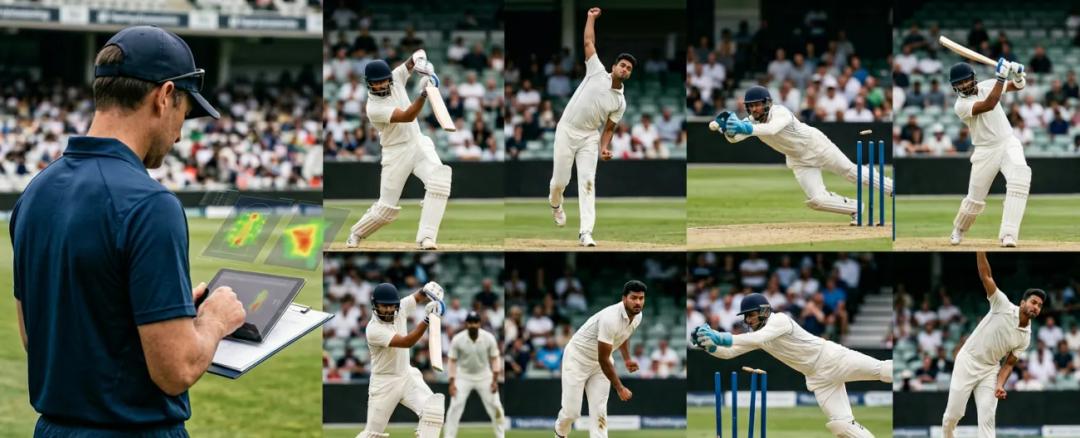
Your cricket team selection strategy must change depending on the format.
T20 Format
Fast and aggressive.
Team strategy:
- Power hitters
- Death-over specialists
- All-rounders
Powerplay strategy plays a huge role here. Teams that dominate the powerplay often control the match.
One-Day Matches
Balanced gameplay.
Team strategy:
- Strong top order
- Middle-order finishers
- 5 proper bowlers
Controlling the middle overs often decides ODI matches.
Test Matches
The long format demands patience.
Team strategy:
- Solid batters
- Specialist bowlers
- Fewer, but quality, all-rounders
Consistency matters more than current form in Tests.
Role-Based Selection Approach

Choose roles that suit the surface and match plan instead of selecting the eleven biggest names.
Batters
Select batters who can handle the expected challenge. On a green pitch, value sound defence and strike rotation; on a flat surface, add a power hitter. Keep at least one finisher who can change pace when the required rate rises.
Bowlers
Build the attack around phases and conditions. A green pitch may justify an extra seamer, while a dry surface can support a second spinner. Cover the new ball, middle overs and death overs so the captain can respond when momentum changes.
All-Rounders
Use all-rounders to balance the eleven, not simply to fill vacancies. A spin-bowling all-rounder adds control on a dry pitch; a seam-bowling option provides insurance in humid conditions and can lengthen the batting order without weakening the attack.
Wicketkeeper
Prioritize keeping skill for the bowling attack, then consider batting role. Standing up to spinners on a turning pitch demands clean hands and footwork, while a keeper-batter who can finish a chase may be more valuable on a flat surface.
Opposition Analysis
Strong cricket match team planning includes studying your opponent:
- Weakness against spin
- How they handle pressure
- Dependence on key players
Common Mistakes in Playing XI Selection

Avoid these:
- Picking players based on name
- Ignoring the pitch
- Poor balance
- Too many similar players
- Weak bowling depth
Even experienced teams make these mistakes under pressure.
Practical Playing 11 Selection Rules
Follow these playing 11 selection rules:
- Always pick at least 5 bowling options
- Balance left- and right-handed batters
- Include a finisher
- Match players to the pitch
- Value fielding
Fantasy Cricket Winning Tips
Fantasy success depends on smart playing XI decisions.
Tips:
- Study the pitch report
- Pick all-rounders
- Choose your captain wisely
- Focus on in-form players
Winners focus on conditions, not popularity.
Using Match Data to Pick Your XI

Recent scorecards make selection discussions more specific. Coaches can compare runs, strike rates, wickets and economy across the same tournament, then weigh those numbers against pitch, weather and role requirements. The data should support cricket judgment, not replace it.
The 12th Men keeps fixtures, scorecards and player records in the cricket tournament management workflow. That gives selectors a consistent evidence base when deciding whether to add a spinner, strengthen the top order or retain an in-form all-rounder.
Illustrative Match Scenario
- Pitch: Turning
- Format: T20
- Weather: Dew expected later
Team combination:
- 4 batters
- 1 wicketkeeper
- 2 all-rounders
- 2 spinners
- 2 pacers
The spinners do their work early, while the ball is dry. The pacers and all-rounders handle the wet ball at the death.
This is how practical team combination in cricket works.
Final Checklist
Before finalizing your XI, ask:
- Does the team match the conditions?
- Have we included enough bowlers?
- Is the batting deep enough?
- Do we have match-winners?
Final Thoughts
Selecting the playing XI in cricket is a mix of skill and smart decision-making. Focus on conditions, balance, and roles to build a strong cricket team selection strategy.
Better planning leads to better results. With The 12th Men, a reliable sports event management solution, you can improve your cricket match team planning and make more confident team selections.
Use cricket analytics and insights to compare player form, roles, and match conditions.
Related Reading
- Beginner's Guide to Cricket Field Positions and Roles
- Cricket Fitness Drills That Improve Match Performance
- How to Build a Winning T20 Strategy for Local Leagues
Continue with The 12th Men
Read next: How Cricket Analytics Can Improve Your Team Performance
Need help setting up your event? Scoring and streaming set up for your event: live scorecards, points table, NRR and YouTube overlays.

Related Articles

Cricket
From Cricket Auction to Scorecard: Sync Squads Faster
Carry approved auction squads into tournament fixtures and scorecards without retyping players. Learn how to verify identities, team branding, match selections and standings before the opening fixture.
Read More > Yug Shah|Oct 29, 2026|

Cricket
Cricket Points Table Tie-Break Rules: Scoring Guide
Prevent qualification disputes by publishing the tie-break chain early. This guide explains how points, wins, net run rate, head-to-head results and other approved criteria should be ordered and applied consistently.
Read More >Yug Shah|Oct 27, 2026|