Beginner’s Guide to Cricket Field Positions and Roles
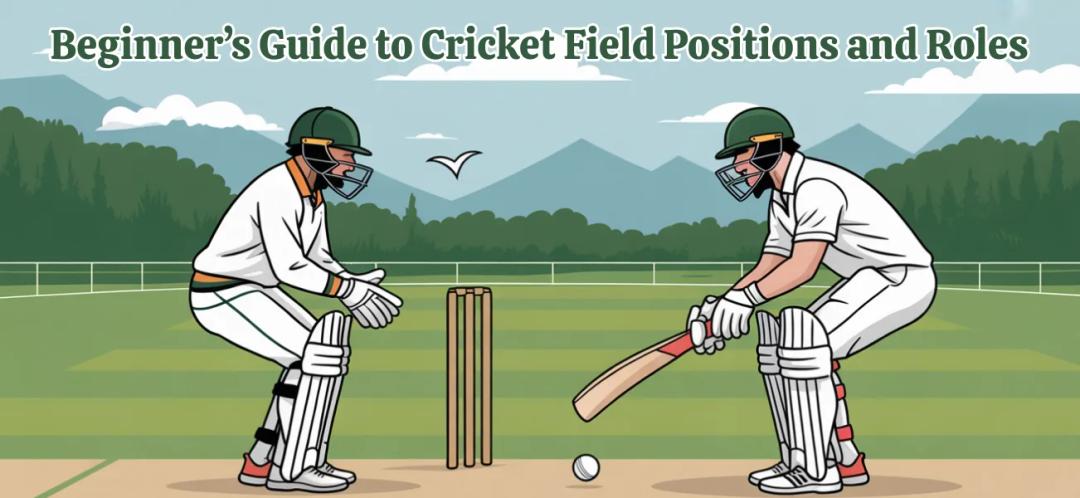
If you're new to cricket, the field can look confusing. Players are scattered across different spots, each with a name and a purpose. This guide is here to make things simple. By the end, you'll have cricket field positions explained in a way that actually sticks.
Once new fans understand field positions, the game suddenly becomes more interesting. You stop just watching the ball and start reading the strategy behind every move.
What Are Cricket Field Positions?
Cricket field positions refer to where fielders stand on the ground during a match. These positions are not random. Each one is carefully chosen based on:
- The type of bowler
- The batter's strengths and weaknesses
- The match situation
- Pitch conditions
Understanding the Cricket Field Layout
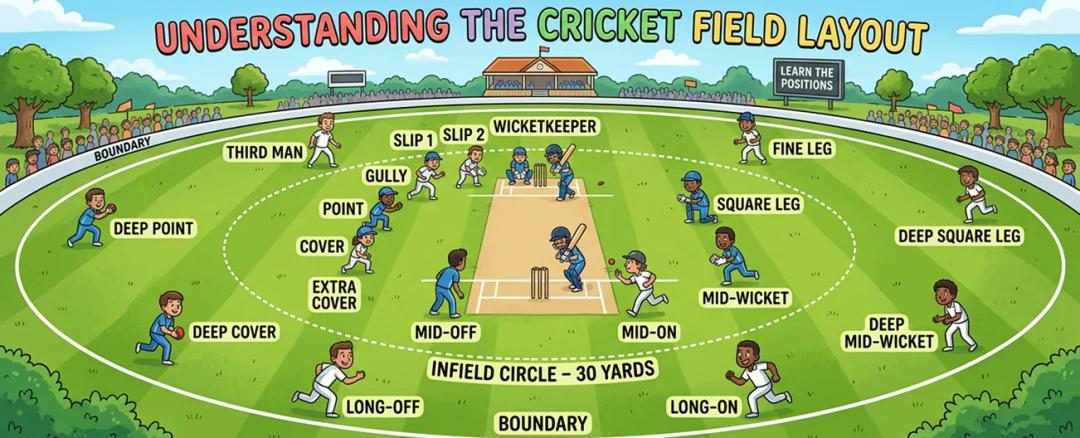
A cricket field is divided into two main sides:
- Off side: The side the batter's chest faces when they take their stance
- Leg side: The side behind the batter's legs and back
For a right-handed batter looking down the pitch at the bowler, the off side is on their right and the leg side is on their left. For a left-hander, it flips.
This concept is key to understanding off side and leg side field positions.
Off Side Positions
These are placed to stop shots like cover drives and cuts.
- Slip
- Gully
- Point
- Cover
- Mid-off
Leg Side Positions
These defend flicks, pulls, and hooks.
- Square leg
- Midwicket
- Mid-on
- Fine leg
Beginners often mix up these sides. A simple trick: the leg side is wherever the batter's pads are pointing, and the off side is the side their bat face is open to.
Basic Cricket Fielding Positions Explained
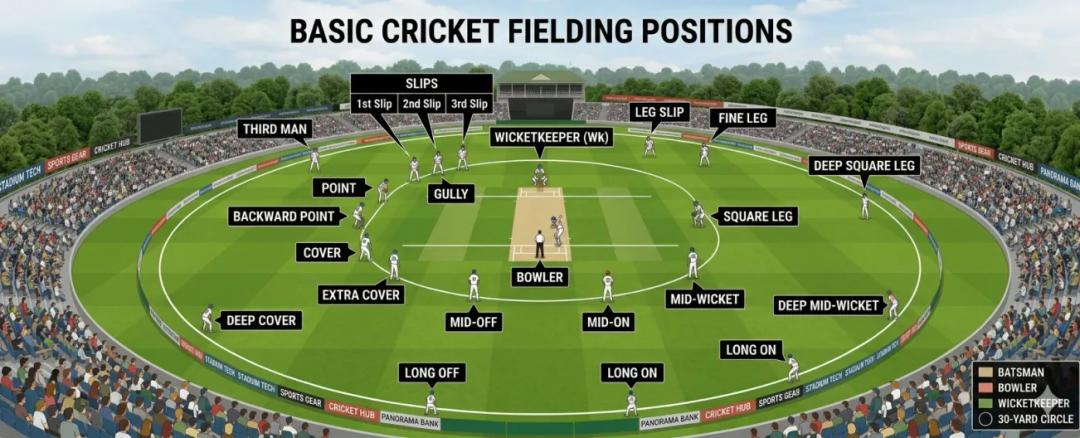
Let's break down the most common cricket fielding position names you'll hear.
Close Catching Positions
These are placed near the batter to catch edges.
- Slip: Beside the wicketkeeper, behind the batter on the off side
- Gully: Slightly wider than slip
- Short leg: Close in on the leg side
These positions are mostly used when fast bowlers are trying to get early wickets.
Infield Positions
These are inside the 30-yard circle.
- Point: Square on the off side
- Cover: Between point and mid-off
- Mid-off: Straight down the ground on the off side
- Mid-on: Straight down the ground on the leg side
These positions are the busiest. They stop quick singles and create pressure.
Outfield Positions
These are placed deeper to stop boundaries.
- Deep cover
- Long-off
- Long-on
- Deep midwicket
You'll see these often in shorter formats like T20s.
Why Field Positions Matter
Fielding is not just about stopping runs. It shapes the entire game.
1. Controls Scoring Areas
Captains place fielders where the batter is likely to hit.
2. Creates Pressure
Tight field placements force mistakes.
3. Helps Bowlers Execute Plans
Every field setup supports a bowling strategy.

Cricket Field Setups
The cricket field setup changes constantly. There is no fixed arrangement.
Defensive Field Setup
Used to stop runs.
- More fielders in the outfield
- Boundary riders placed strategically
Attacking Field Setup
Used to take wickets.
- Slips and short leg included
- Fielders placed close to the batter
Balanced Field Setup
A mix of both.
- Covers the main scoring areas
- Keeps catching options open
Beginners enjoy watching matches more when they start predicting field setups. It turns passive viewing into active thinking.
Cricket Field Positions Used in the IPL
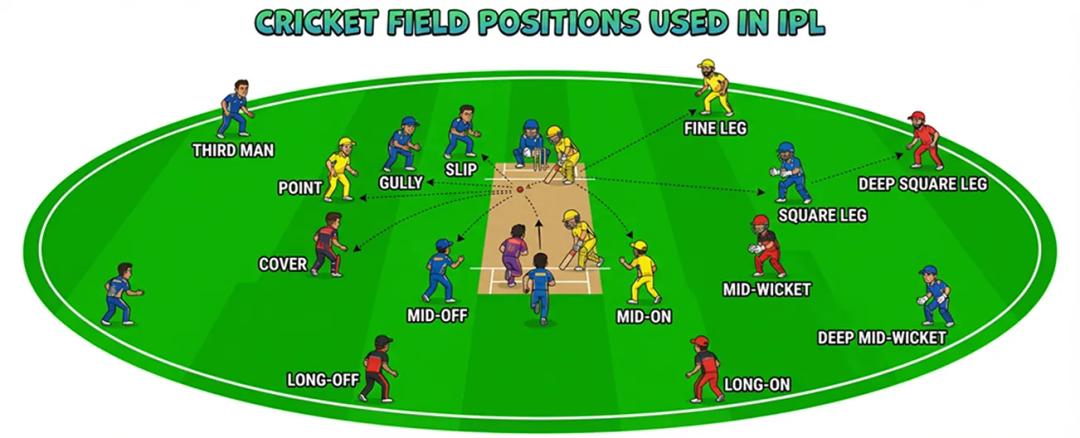
Modern cricket, especially the IPL, has changed how fielding works. You'll often see creative placements.
For deeper insights into how teams build their strategies, read our guide on selecting the playing XI based on conditions.
Common IPL Field Positions
- Deep point for aggressive cut shots
- Third man for edges
- Long-on and long-off for big hits
- Fine leg for scoop shots
IPL teams adjust field positions ball by ball. That level of detail is what makes the format so fast-paced.
Roles of Each Player in the Field
Every player has a specific role beyond just standing in a position.
Wicketkeeper
- Stands behind the stumps
- Catches edges
- Guides field placements
Slip Fielders
- Need quick reflexes
- Catch edges from fast bowlers
Infielders
- Stop singles
- Create run-out chances
Outfielders
- Save boundaries
- Throw accurately to the wicket
Tips for Beginners to Learn Field Positions Faster
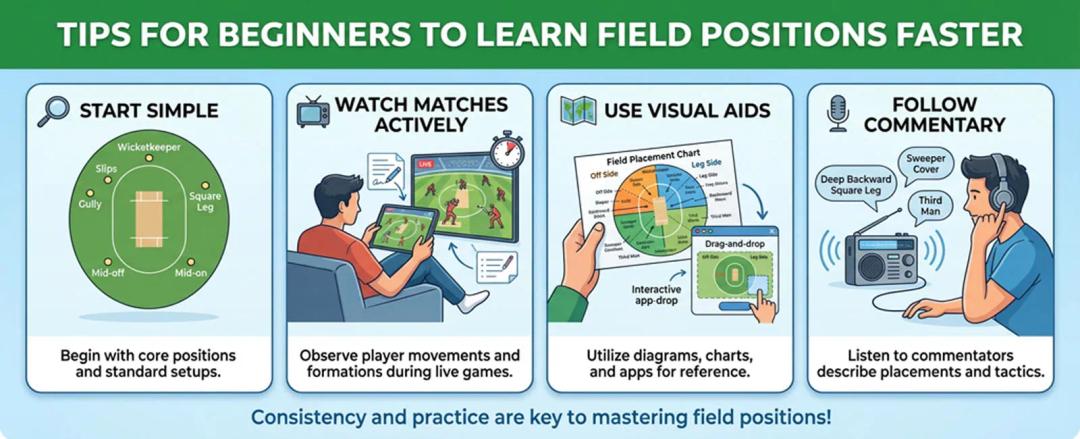
If you're just starting, don't try to memorize everything at once.
Start Simple
Learn mid-off, mid-on, point, and square leg first.
Watch Matches Actively
Pause and identify positions.
Use Visual Aids
Field maps help a lot.
Follow Commentary
Commentators often explain placements.
Consistent watching builds understanding faster than reading alone.
Why The 12th Men Stands Out
If you're serious about learning cricket strategy, platforms matter.
Here's why The 12th Men stands out.
1. Real Match Insights
It helps you understand how teams think and plan.
2. Smart Tools
From scoring apps to match analysis, everything is built for players and fans. If you are managing tournaments or local matches, the sports event management solution makes organizing teams, tracking scores, and handling events much easier.
3. Practical Learning
You don't just read about cricket. You see it in action.
Final Thoughts
Cricket becomes far more engaging once you understand where players stand and why. This guide aimed to get cricket field positions explained in a way that feels natural, not overwhelming.
Beginners who take time to learn field positions quickly start enjoying matches at a deeper level. You begin to see patterns, predict moves, and appreciate the strategy behind every ball.
Use cricket analytics and insights to review player roles and performance patterns across matches.
Related Reading
- Cricket Fitness Drills That Improve Match Performance
- Powerplay Strategy in Cricket: When to Attack and When to Defend
- How to Build a Winning T20 Strategy for Local Leagues
Sources and methodology
Examples involving team sizes, scores, schedules, budgets, or workflows are illustrative planning scenarios unless a source is cited. Organizers should also check their governing body's current rules and local requirements.
Continue with The 12th Men
Read next: Cricket Scoring Rules Explained for Beginners
Need help setting up your event? Scoring and streaming set up for your event: live scorecards, points table, NRR and YouTube overlays.

FAQ
Got Questions? We've Got Answers.
Start with mid-off and mid-on. They are straight down the ground and easy to visualise.
Slips are positioned to catch edges when the ball moves off the pitch or swings in the air.
Captains move fielders because the batter, bowler, match phase and tactical situation keep changing.
Related Articles
Cricket
From Cricket Auction to Scorecard: Sync Squads Faster
Carry approved auction squads into tournament fixtures and scorecards without retyping players. Learn how to verify identities, team branding, match selections and standings before the opening fixture.
Read More > Yug Shah|Oct 29, 2026|

Cricket
Cricket Points Table Tie-Break Rules: Scoring Guide
Prevent qualification disputes by publishing the tie-break chain early. This guide explains how points, wins, net run rate, head-to-head results and other approved criteria should be ordered and applied consistently.
Read More >Yug Shah|Oct 27, 2026|