Cricket Fielding Drills That Make You a Better Team
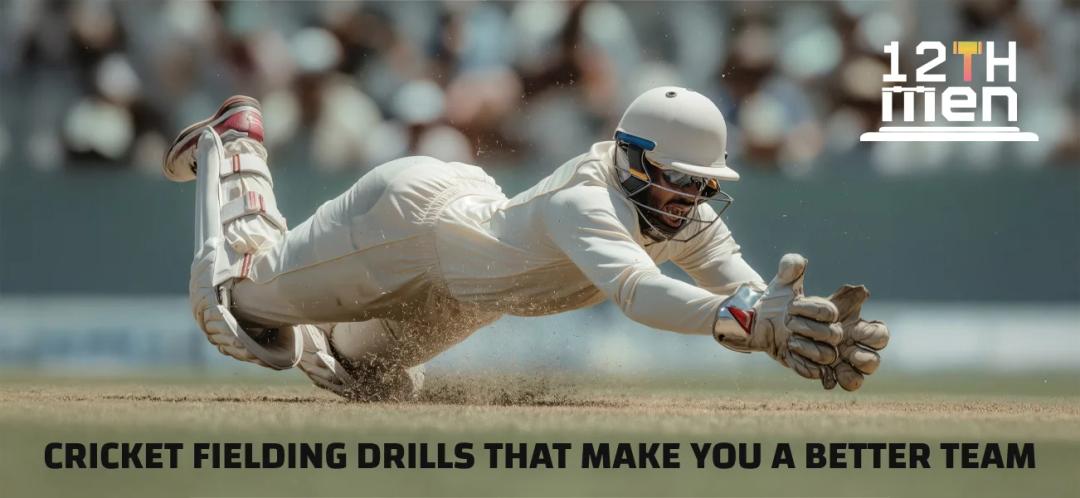
Table of contents
The 2026 cricket season is placing even more value on athletic fielding. Faster scoring rates, shorter formats, and tighter finishes mean one clean stop or direct hit can decide a match.
Batting and bowling still shape the contest, but modern teams cannot treat fielding as the "extra" part of cricket. A dropped catch, boundary misfield, or rushed throw can undo several overs of good work.
That is why practising the right cricket fielding drills should be part of every weekly plan. Consistent sessions improve catching, ground-fielding technique, throwing accuracy, communication, and decision-making under pressure.
Teams that train fielding seriously do more than save runs. They build pressure, lift the energy of the group, and create chances that would otherwise disappear.
This refreshed 2026 guide covers practical drills for junior, club, academy, and adult players. Each drill is easy to adapt to the number of players, available space, and standard of the team.
Why Fielding Matters More Than People Think
Batters can hit a great shot and still get out to a sharp catch. Bowlers can bowl a perfect delivery, but it only becomes a wicket if the catch is taken.
Fielding is a team effort. Every player is involved.
Good fielding creates:
- Fewer easy singles
- More dot balls
- More run-out chances
- Better energy in the squad
- Stronger match momentum
That is fielding impact.
A Quick Look at Research on Fielding Performance
Fielding is now studied scientifically.
A study published in the Journal of Sports Sciences showed that elite fielders have better reaction time and decision-making under pressure compared to amateur players. It also highlighted how training can improve these skills.
Another sports science study by Stretch and Bartlett discussed performance demands in cricket and noted how fielding intensity has increased in limited-overs formats, requiring better agility and sprint endurance.
These studies support what coaches already know. Fielding is not just talent. It is training.
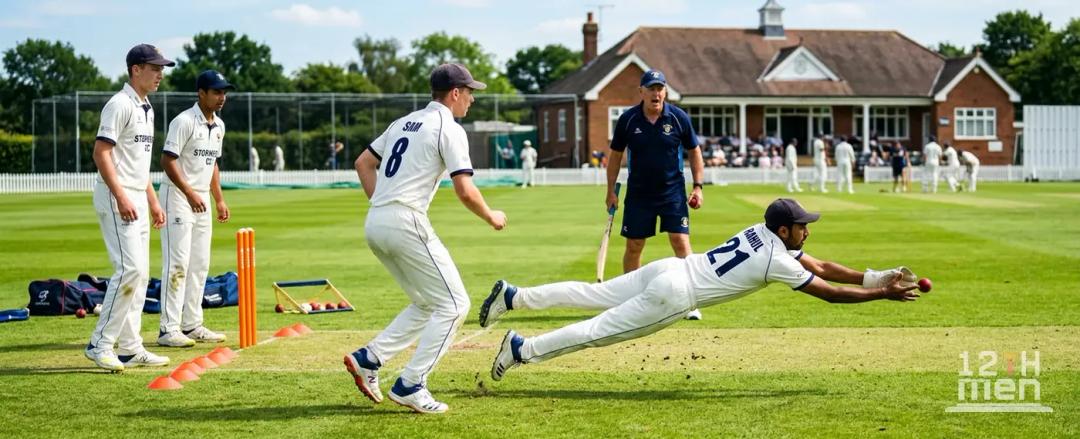
How to Train Fielding the Right Way
Before we jump into drills, here is a simple truth.
Fielding practice fails when it becomes boring.
Players stop focusing. Coaches stop correcting. Sessions become repetitive.
The best fielding sessions follow three rules:
- Short drills with high intensity
- Clear technique focus
- Match-like pressure
A sharp 10-minute drill is better than a lazy 40-minute one.
Cricket Fielding Drills Every Team Should Practice
Below are the best cricket fielding drills for improving team performance. Each drill includes the goal, setup, and coaching tips.
1. The Two-Hand Catching Circle Drill
What It Improves
- Catching technique
- Hand positioning
- Focus and reflexes
Setup
Players form a circle. One player stands in the middle with a ball.
The middle player throws catches to each person quickly.
Coaching Tips
- Hands should be soft, not stiff
- Catch with two hands unless training one-hand catching
- Watch the ball into the hands
Teams who do this drill regularly reduce dropped catches significantly over time.
2. Reaction Catch Drill With Tennis Balls
What It Improves
- Reflexes
- Hand speed
- Decision-making
Setup
Use tennis balls instead of cricket balls. The coach stands 5 to 7 meters away and throws fast, unpredictable catches.
You can also use rebound walls.
Coaching Tips
- Stay on your toes
- Keep knees slightly bent
- Catch close to the body
This drill is simple but powerful.
Tennis ball drills help beginners improve confidence quickly.
3. Slip Catching Drill
What It Improves
- Close catching
- Fast reflexes
- Soft hands
Setup
Slip fielders stand in their positions. The coach uses a bat to edge balls.
Start slow. Increase pace gradually.
Coaching Tips
- Fingers down for low catches
- Head still
- Hands forward, not too close to the chest
Slip catching is a specialist skill. It requires repetition.
4. High Catch and Boundary Awareness Drill
What It Improves
- Judgment under the ball
- Communication
- Boundary control
Setup
The coach hits high balls toward boundary riders. Players practice calling and catching.
Add a rope to simulate the boundary.
Coaching Tips
- Call early and loud
- Keep eyes on the ball, not the rope
- Practice jumping and catching inside the rope
This drill helps avoid common match errors like stepping on the boundary.
5. One-Hand Catching Drill
What It Improves
- Athletic catching
- Wrist strength
- Match readiness
Setup
Players stand in a line. The coach throws slightly wide balls that force one-hand catches.
Coaching Tips
- Do not attempt without a warm-up
- Focus on control, not style
- Catch and bring the ball into the body
This drill is great for improving highlight catches, but it should not replace two-hand fundamentals.
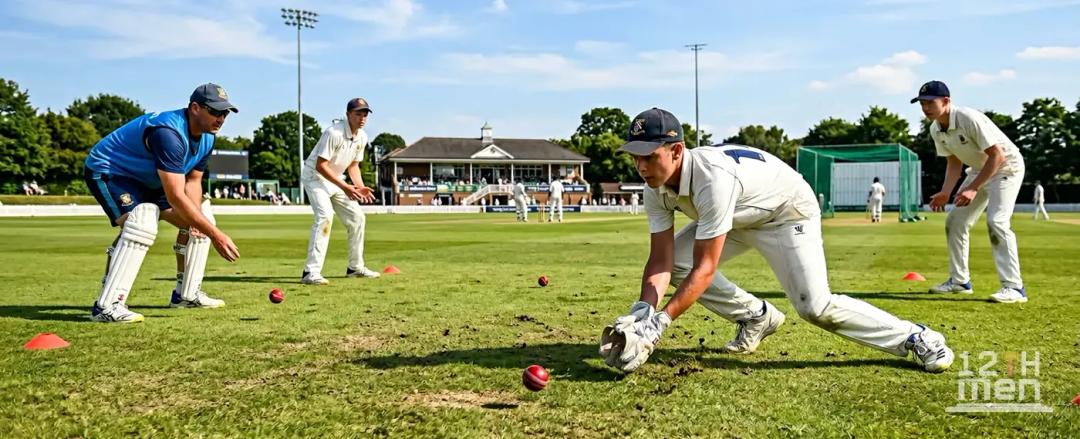
6. Ground Fielding Drill With Rolling Balls
What It Improves
- Body position
- Clean pickup
- Speed into the throw
Setup
The coach rolls balls quickly along the ground. Players charge in, pick up cleanly, and throw at a target.
Coaching Tips
- Get low early
- Use a one-hand pickup for speed
- Keep your head over the ball
This drill is one of the biggest game changers for teams that leak singles.
7. Two-Cone Sprint and Pick Drill
What It Improves
- Sprinting into pickup
- Agility
- Fitness with technique
Setup
Place two cones 10 meters apart. A ball is rolled between the cones. The player sprints, picks up, and returns.
Coaching Tips
- Keep chest forward
- Do not slow down before pickup
- Focus on clean hands
This drill teaches players to field while moving at speed.
8. Direct-Hit Run-Out Drill
What It Improves
- Throw accuracy
- Handling pressure situations
- Match-finishing ability
Setup
Set stumps at one end. Players field and throw at the stumps from different angles.
Use targets such as:
- Single stump target
- Middle stump target
- Off stump target
Coaching Tips
- Throw quickly, not wildly
- Use wrist snap for accuracy
- Practice from both sides
Teams who practice direct hits regularly create more run-out chances in real matches.
9. Relay Throw Drill
What It Improves
- Team coordination
- Throwing speed
- Cutting off boundaries
Setup
Create relay stations across the field. The ball is thrown from the deep boundary to the inner ring to the wicketkeeper.
Coaching Tips
- Use flat throws
- Call loudly
- Catch and release quickly
This drill builds the habit of working as a unit.
10. Inner Ring Quick Pick and Throw Drill
What It Improves
- Fast single prevention
- Reflex movement
- Short-distance accuracy
Setup
Players stand in close fielding positions. The coach hits soft shots. Fielders pick up and throw quickly to a target.
Coaching Tips
- Stay low and balanced
- Throw sidearm quickly
- Focus on speed and accuracy
Inner ring fielding decides tight games.
11. Diving Stop Drill
What It Improves
- Commitment
- Boundary saving
- Athletic movement
Setup
The coach hits balls slightly out of reach. Fielders dive, stop the ball, and recover quickly.
Coaching Tips
- Learn safe diving technique
- Practice on grass first
- Focus on stopping the ball, not catching
This drill is physically demanding but extremely useful.
12. Catch Under Pressure Drill
What It Improves
- Match pressure simulation
- Mental focus
- Consistency
Setup
Create a scoring system. For example:
- Catch taken: +2 points
- Catch dropped: −3 points
Set a target score for the group.
Coaching Tips
- Encourage pressure, not fear
- Keep the session fast
- Rotate fielders quickly
Pressure scoring drills improve match confidence faster than casual catching practice.

Fielding Drills for Adults
Fielding drills for adults should be short, intense, and close to real match situations. After a proper warm-up, use 15- to 20-minute blocks that combine movement, decision-making, and accurate throwing rather than repeating catches from a standing position.
A balanced adult session can include:
- Reaction catches from different angles to sharpen reflexes.
- Ground-ball pickups followed by a direct hit at one stump.
- Boundary relay throws that require clear calls and quick transfers.
- A pressure circuit where mistakes add a short sprint or repeat.
Adjust the pace and distance for mixed-ability groups, and prioritise sound technique before increasing speed. Adults returning after a break should build diving and high-intensity work gradually to reduce avoidable strain.
Fielding Drills for Wicketkeepers
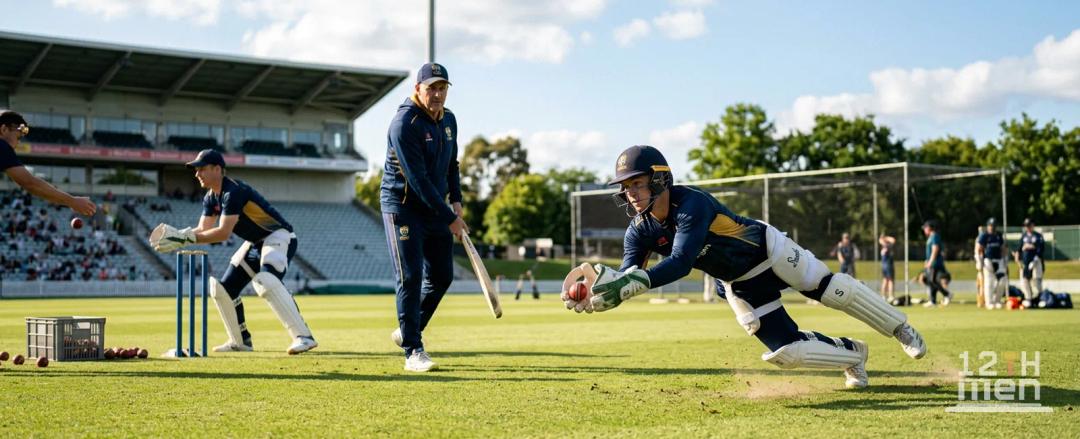
Wicketkeepers are fielders too, just with special responsibilities.
Here are key wicketkeeping drills.
13. Glove Work Drill
What It Improves
- Quick collection
- Clean glove work
- Balance behind the stumps
Setup
The coach throws balls slightly wide. The keeper catches cleanly and returns to stance.
Coaching Tips
- Keep hands soft
- Stay low
- Do not stand up too early
14. Stumping Drill
What It Improves
- Footwork
- Stumping speed
- Decision-making
Setup
The coach throws the ball outside off stump. The keeper collects and breaks the stumps quickly.
Coaching Tips
- Move feet first
- Do not reach across the body
- Keep head steady
How Often Should You Practice Cricket Fielding Drills?
This is a common question.
The best answer depends on your match schedule, but a good routine is:
- 2 fielding sessions per week
- 20 to 30 minutes of fielding at every practice
- Match-simulation fielding on weekends
even brief daily practice improves performance if intensity stays high.
Common Fielding Mistakes Coaches Should Fix Early
Even good athletes make mistakes.
Here are common issues:
- Standing flat-footed
- Picking up the ball with poor body position
- Throwing without balance
- Catching with hard hands
- Poor communication on high catches
Fixing basics early saves many runs later.
How Coaches Can Measure Fielding Improvement
Fielding feels emotional, but you can measure it.
Track:
- Catch success rate in training
- Direct-hit accuracy percentage
- Boundary saves per match
- Misfields per innings
- Run-out attempts created
Cricket Basics and Why Understanding Fielding Matters
Many beginners focus only on batting and bowling. But cricket is a three-part game.
Batting, bowling, and fielding.
Understanding the full game makes training smarter.
Why The 12th Men Is the Best Platform for Cricket Teams
Fielding drills improve performance. But tracking performance matters too.
Teams often train hard but fail to record results properly.
That is where The 12th Men helps.
The platform supports cricket communities with:
- Match scoring and structured records
- Player stats tracking
- Tournament visibility
- Team performance history
Teams improve faster when they can see patterns over time. They can identify if they are losing matches due to fielding errors. They can also spot which players consistently contribute in the field.
The 12th Men gives teams that clarity.
How Teams Can Combine Fielding Drills With Match Data
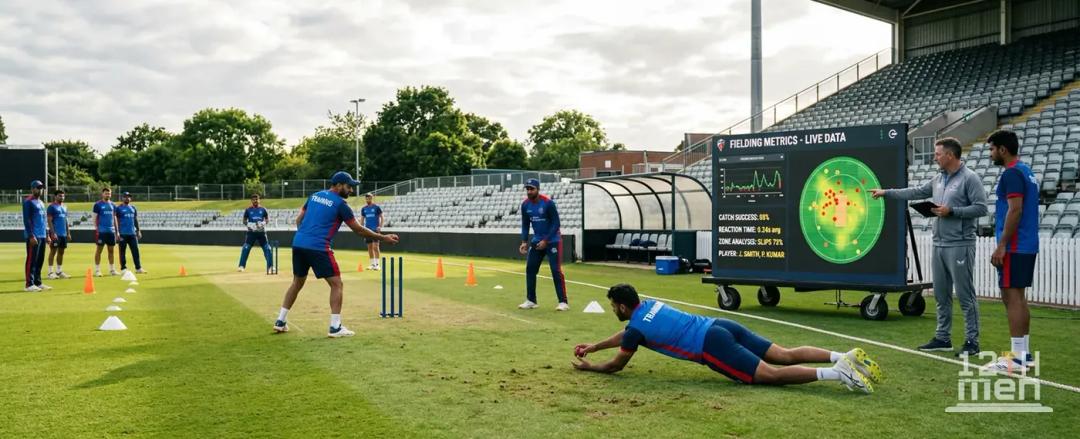
A strong approach looks like this:
- Train fielding drills twice a week
- Track fielding performance in matches
- Review match highlights and mistakes
- Repeat targeted drills based on weaknesses
Teams who follow this cycle improve quickly. They stop repeating the same errors.
Training becomes purposeful.
Sample Weekly Fielding Plan for Coaches
Here is a simple schedule.
Day 1
- Catching circle drill
- Ground pickup drill
- Direct-hit drill
Day 2
- Slip catching
- Relay throws
- Diving stops
Match Day Warm-Up
- 10 minutes of quick catches
- 10 minutes of throw accuracy
- 5 minutes of high catches
Consistency matters more than complexity.
Final Thoughts
Cricket fielding is not about showing off.
It is about saving runs. Creating pressure. Building confidence. Supporting bowlers. Winning tight games.
The right cricket fielding drills can turn an average team into a disciplined unit. It takes time, but results show quickly when training stays focused.
Teams that train fielding seriously earn respect fast. Opponents hesitate to run singles. Batters take fewer risks. Bowlers feel supported.
That is what a strong fielding side does.
And when teams also track their match performance through structured platforms like The 12th Men, improvement becomes easier to measure and repeat.
Fielding is not a side skill.
It is a winning habit.
Use cricket analytics and insights to track catches, run-outs, boundary saves, and fielding trends.
Related Reading
- Beginner's Guide to Cricket Field Positions and Roles
- Cricket Fitness Drills That Improve Match Performance
- How to Select the Perfect Playing XI Based on Conditions
Continue with The 12th Men
Read next: How Cricket Analytics Can Improve Your Team Performance
Need help setting up your event? Scoring and streaming set up for your event: live scorecards, points table, NRR and YouTube overlays.

FAQ
Got Questions? We've Got Answers.
Adults should include focused fielding work two or three times a week. Short, high-intensity blocks of 15 to 20 minutes are usually more useful than one long, low-energy session.
Start with the two-hand catching circle drill for technique, then add reaction catches with tennis balls and pressure catches to improve reflexes and decision-making.
Use time limits, running between repetitions, clear calling, target stumps and consequences for errors. These constraints reproduce the movement, communication and pressure players face in a match.
Related Articles
Cricket
From Cricket Auction to Scorecard: Sync Squads Faster
Carry approved auction squads into tournament fixtures and scorecards without retyping players. Learn how to verify identities, team branding, match selections and standings before the opening fixture.
Read More > Yug Shah|Oct 29, 2026|

Cricket
Cricket Points Table Tie-Break Rules: Scoring Guide
Prevent qualification disputes by publishing the tie-break chain early. This guide explains how points, wins, net run rate, head-to-head results and other approved criteria should be ordered and applied consistently.
Read More >Yug Shah|Oct 27, 2026|